


 English
Wire Rope Fittings: Thimbles, Clips, Turnbuckles & Swaged Sockets Explained
Content
- 1 What Are Wire Rope Fittings and Why Do They Matter?
- 2 Wire Rope Thimbles: Protecting the Eye Under Load
- 3 Wire Rope Clips: Forming Secure Field Terminations
- 4 Turnbuckles: Precision Tension Adjustment in Rigging
- 5 Swaged Socket Fittings: Maximum Strength Terminations
- 6 Applications: Construction Cranes and Marine Mooring
- 7 How to Select the Right Wire Rope Fitting
- 8 Conclusion
In every lifting and rigging system — whether suspending a steel beam from a construction crane, mooring a vessel in open water, or tensioning a cable-supported bridge — the performance of the entire assembly ultimately depends on its weakest connection point. That connection point is almost always a wire rope fitting. Selecting the right fitting for each application is not a matter of preference; it is a safety-critical engineering decision that determines whether a system performs reliably under load or fails catastrophically.
What Are Wire Rope Fittings and Why Do They Matter?
Wire rope fittings — also referred to as cable hardware or rigging accessories — are the mechanical components that terminate, connect, tension, and protect wire ropes at their end points and intermediate attachment locations. Without fittings, a wire rope is simply a length of wound steel with no practical way to attach it to a load, a structure, or another rigging component.
The importance of fitting quality extends beyond simple load capacity. A fitting that is correctly rated but improperly installed, mismatched to the rope diameter, or manufactured from inadequate material introduces failure modes that the rope itself would not create. Industry standards including ASME B30.9, EN 13414, and OSHA regulations governing lifting and rigging operations all specify fitting requirements precisely because of this — the fitting is the system's most vulnerable and most critical interface.
Common wire rope fitting categories include thimbles, wire rope clips, turnbuckles, swaged socket fittings, shackles, and hooks. Each serves a distinct mechanical function, and each is engineered for specific load requirements, environmental conditions, and installation methods.
Wire Rope Thimbles: Protecting the Eye Under Load
When a wire rope is formed into a loop — the eye — at its end to create an attachment point, the rope at that bend is exposed to compressive forces, abrasion against hardware, and a reduction in effective bend radius. Without protection, repeated loading cycles cause the eye to deform, the individual wires to fatigue at the bend, and the effective strength of the termination to degrade over time.
A wire rope thimble is installed inside the eye to address all three of these failure mechanisms simultaneously. The thimble's grooved profile supports the rope around the full arc of the bend, distributing compressive load evenly rather than concentrating it at a single contact point. It maintains the correct bend radius — preventing the rope from being bent tighter than the manufacturer's minimum recommendation — and creates a hardened bearing surface between the rope and the connecting hardware, eliminating direct metal-on-metal abrasion.
Thimbles are manufactured in galvanized steel for general industrial and construction applications, and in stainless steel for marine or corrosive environments. Working Load Limit (WLL) is calculated by dividing the rope's minimum breaking strength by a safety factor, typically between 4:1 and 6:1 depending on the application standard. The thimble must be rated to match the WLL of the rope and the connection hardware — an undersized thimble in an oversized rope eye will deform under load and lose its protective function.
Thimbles are standard components in crane and hoist eye slings, lifting bridles, marine rigging, and construction anchoring and suspension systems where repeated loading and high-cycle fatigue are primary concerns.
Wire Rope Clips: Forming Secure Field Terminations
Wire rope clips — sometimes called cable clamps — are the most commonly used field-installed termination method for forming an eye in a wire rope without specialized equipment. Their installation requires only a wrench and a torque specification, making them practical for job-site applications, temporary rigging setups, and situations where rope length adjustment may be needed after initial installation.
The standard U-bolt wire rope clip consists of a U-shaped bolt, a saddle, and two nuts. Correct installation follows the rule that has become fundamental to rigging safety: never saddle a dead horse. This means the saddle — the load-bearing component — must always be placed on the live (load-bearing) end of the rope, with the U-bolt on the dead (short) end. Reversing this orientation reduces the termination's efficiency by approximately 40% and significantly increases the risk of rope slippage under load.
The fist-grip clip offers an alternative construction that eliminates the orientation concern entirely. Because it features two saddles on opposing sides of the rope, it clamps both the live and dead ends symmetrically, providing consistent efficiency regardless of which way the fitting is positioned. This makes fist-grip clips preferable in applications where installation by less experienced personnel is likely, or where the rope end orientation may not be clearly marked.
Industry standards require a minimum of three clips for most wire rope eye terminations, with spacing and torque values specified by rope diameter. Clips are not recommended for overhead lifting applications, where permanent terminations such as swaged sockets are required by most applicable standards.
Turnbuckles: Precision Tension Adjustment in Rigging
Many wire rope applications require not just a secure connection but an adjustable one — the ability to fine-tune tension after installation, correct slack introduced by stretch or thermal movement, or equalize load distribution across multiple rope legs. The turnbuckle is the standard hardware solution for this requirement.
A turnbuckle consists of a central body threaded with opposite-hand threads at each end, and two end fittings that screw into those threads. Rotating the body in one direction simultaneously draws both end fittings inward, shortening the effective length of the assembly and increasing tension. Rotating in the opposite direction extends the fittings and reduces tension. The range of adjustment depends on the body length and thread travel.
End fitting configurations vary to suit connection requirements. Hook ends attach quickly to ring fittings or load points without tools, making them suitable for temporary or frequently repositioned rigging. Eye ends provide a closed loop for bolt or pin connections, offering more secure permanent attachment. Jaw ends use a clevis-style fork that accepts a pin, enabling articulation at the connection point — important in applications where the rigging geometry changes under load.
Turnbuckles are specified in galvanized carbon steel for construction, infrastructure, and transportation rigging, and in Type 316 stainless steel for marine, architectural, and corrosive-environment applications. In marine rigging, where continuous exposure to salt water and spray accelerates corrosion, stainless steel turnbuckles with swaged terminations provide the combination of corrosion resistance and connection integrity that galvanized alternatives cannot match over a full service life.
Swaged Socket Fittings: Maximum Strength Terminations
For applications requiring the highest possible termination efficiency — critical crane lifts, offshore mooring systems, elevator suspension cables, and bridge stay systems — swaged socket fittings provide the performance that no mechanical termination method can replicate.
A swaged socket is attached to the wire rope end using a hydraulic press that compresses the socket body uniformly around the rope, deforming the metal into mechanical engagement with the individual wires and strands. The result is a termination that achieves 95–100% of the rope's minimum breaking strength — effectively transferring the full load capacity of the rope through the fitting without slippage, deformation, or stress concentration at the connection point.
The table below summarizes the efficiency ratings of common termination methods, which directly determine the effective Working Load Limit of the complete assembly:
| Termination Method | Efficiency Rating | Best Application |
|---|---|---|
| Poured (Spelter) Socket | 100% | Permanent critical lifts, structural cable |
| Swaged Socket Fitting | 95–100% | Crane rigging, mooring, elevator cables |
| Mechanical Splice | 90–95% | Slings, general industrial rigging |
| Wire Rope Clips (U-bolt) | 80% | Field terminations, temporary rigging |
| Wedge Socket | 75–90% | Field-adjustable crane hoist lines |
Wedge sockets occupy a useful intermediate position — they do not achieve the full efficiency of swaged fittings, but they allow field installation and rope-end adjustment without a hydraulic press, making them the preferred choice for crane hoist applications where rope replacement must be performed on-site and downtime is a constraint.
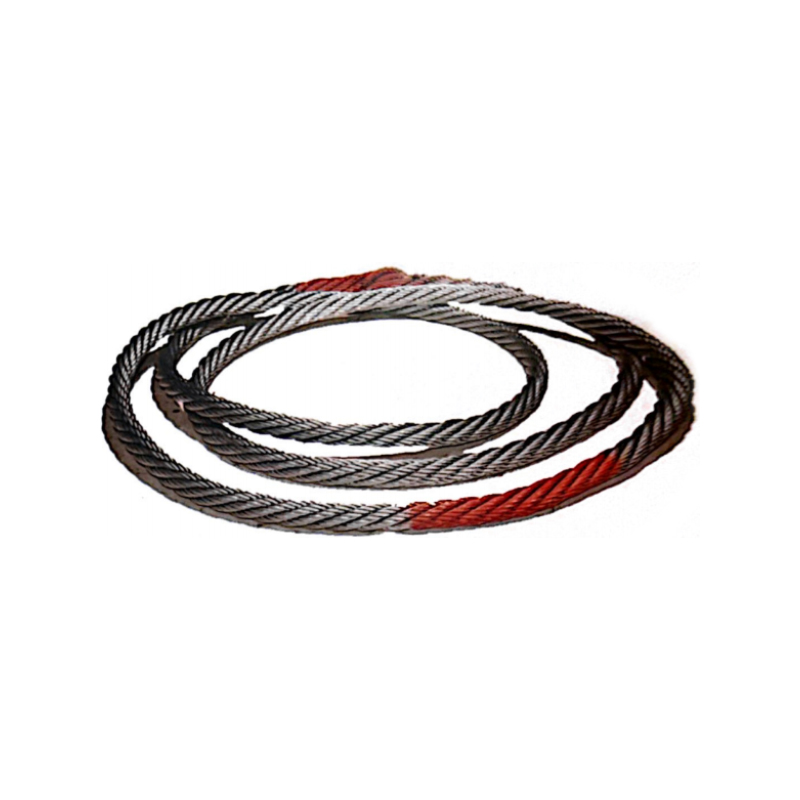
Applications: Construction Cranes and Marine Mooring
The selection of wire rope fittings changes significantly depending on the operating environment, and two environments represent the most demanding and most clearly defined requirements: construction crane operations and marine mooring systems.
In construction crane and hoisting applications, fittings must handle dynamic loads — the sudden application and release of load weight that generates shock forces significantly above the static load rating. Crane hoist lines, load blocks, and pendant assemblies all operate in this dynamic regime. Swaged socket fittings and mechanical splices are preferred for permanent rope-end terminations because their high efficiency ratings preserve the full design safety factor of the system even after accounting for dynamic load factors. Thimbles are standard in all eye connections to maintain bend radius and prevent fatigue cracking at contact points. Wire rope clips are acceptable for temporary blocking and guying arrangements but are not permitted for overhead lifting under ASME B30.9 and equivalent standards.
In marine and offshore mooring applications, corrosion is the primary material threat. Saltwater, tidal cycling, and atmospheric chloride exposure degrade galvanized carbon steel fittings at rates that make regular inspection and replacement mandatory. Grade 316 stainless steel — which offers substantially better chloride resistance than Grade 304 — is the material specification for mooring fittings, shackles, and turnbuckles in offshore environments. Properly specified stainless steel fittings can extend service life by up to 50% compared to galvanized alternatives in high-salt conditions, reducing maintenance frequency and associated vessel downtime.
How to Select the Right Wire Rope Fitting
Fitting selection for any wire rope application requires matching four parameters: load requirement, environmental condition, installation method, and certification standard.
- Load requirement: Determine the maximum working load, apply the appropriate safety factor for the application category, and verify that the fitting's rated WLL meets or exceeds the result. Never select a fitting based on breaking strength alone — WLL is the operational limit.
- Environmental condition: Outdoor, marine, and chemical environments require corrosion-resistant materials. Match galvanized, stainless Grade 304, or stainless Grade 316 specification to the severity of the exposure. Inspect surface finish for uniformity and coating thickness before installation.
- Installation method: Assess whether field installation with standard tools is required, or whether the application permits workshop swaging with hydraulic equipment. This determines whether mechanical fittings or swaged terminations are appropriate, and sets the upper limit on achievable efficiency rating.
- Certification standard: Verify that fittings carry the certifications required for the application jurisdiction — ASME B30.9 for US lifting operations, EN 13414 for European rigging, ISO 9001 for quality management compliance. Certified products include traceability documentation and proof-load test records that are required for inspection and audit purposes.
Fittings that meet these criteria — correctly rated, properly specified for the environment, matched to the installation method, and carrying the relevant certifications — provide the structural integrity, load reliability, and compliance documentation that demanding lifting and rigging operations require.
Conclusion
Wire rope fittings are the components that determine whether a rigging system performs safely at its rated capacity or fails at its weakest point. Thimbles protect eye terminations from fatigue and abrasion. Wire rope clips provide flexible field terminations for non-overhead applications. Turnbuckles enable precise tension control across construction, marine, and structural rigging. Swaged socket fittings deliver maximum termination efficiency for the most critical lifts. Understanding the function, limitations, and selection criteria of each fitting type is the foundation of safe wire rope system design — and the starting point for any procurement decision where safety and compliance are non-negotiable.
Related Products
-
 View More
-
 View More
ASTM A1023 Galvanized 7X7 7X19 Small Diameter Flexible Specialty Wire Rope
-
 View More
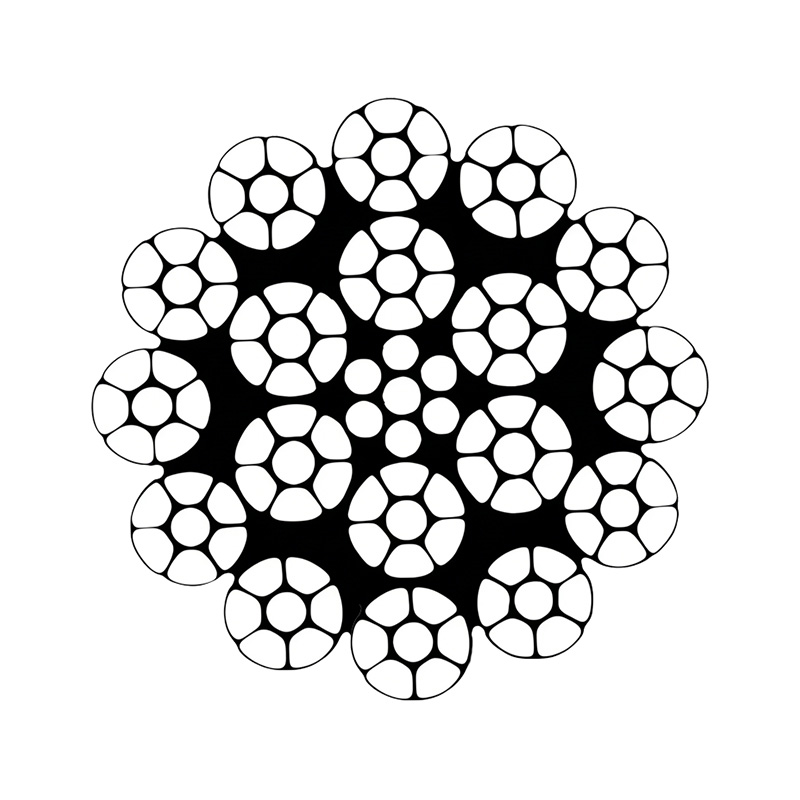
18×7 and 18×19 Steel Wire Rope ISO 2408 Class – Non-Rotating Rope
-
 View More
6×7 Steel Wire Rope ISO 2408 Class – High Tensile Strength Galvanized Wire Rope
-
View More
6×19M Steel Wire Rope ISO 2408 Class – Flexible & Durable Wire Rope
-
 View More
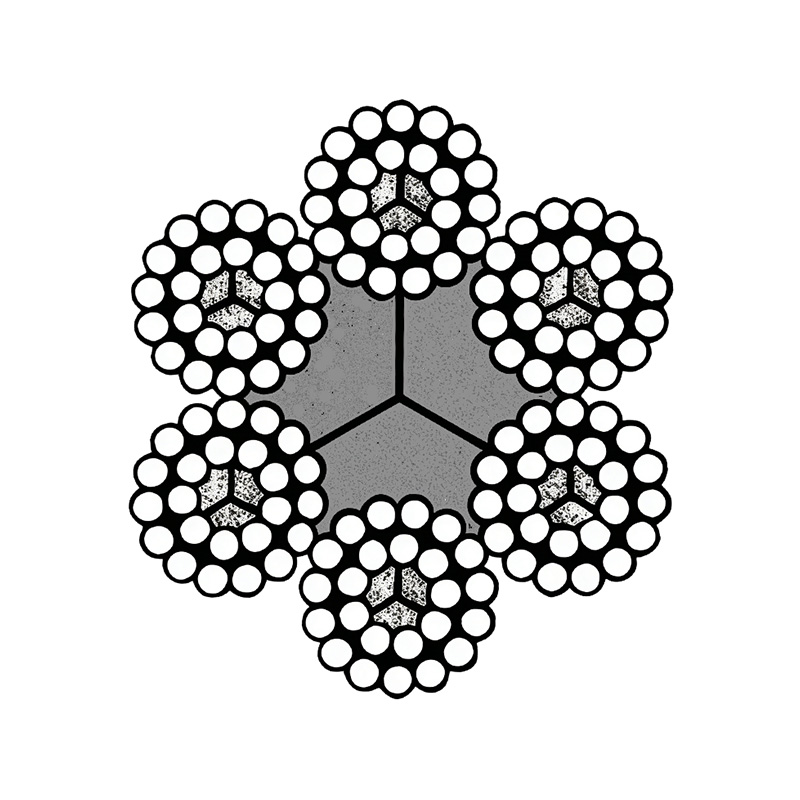
6×24 Steel Wire Rope ISO 2408 Class – High-Flexibility Wire Rope with FC Core
Contact Us
-

-
 +86-13395162883 / +86-0510-86361180
 -
 No. 25 Xizhang Road, Changshou Village, Zhouzhuang Town, Jiangyin City, Wuxi City, Jiangsu Province, China


- Quick Links
- Product Categories
- Wire Rope
- Wire Rope Fittings
- Chain
- Wire Rope Accessories
- Packaging Types

Message Us Now !
