


 English
Oval Aluminium Ferrule Wire Rope Eye Termination | FSET Guide
Content
- 1 Understanding Oval Aluminium Ferrule Wire Rope Eye Termination
- 2 Why Oval Aluminium Is the Industry Standard for Eye Terminations
- 3 Forms of Oval Aluminium Ferrule: Form A and Form B
- 4 Step-by-Step Guide to Making an Oval Aluminium Ferrule Eye Termination
- 5 Compatible Wire Rope Types for Oval Aluminium Ferrule Eye Terminations
- 6 Common Mistakes and How to Avoid Them
- 7 Inspection and Service Life of Ferrule-Secured Eye Terminations
Understanding Oval Aluminium Ferrule Wire Rope Eye Termination
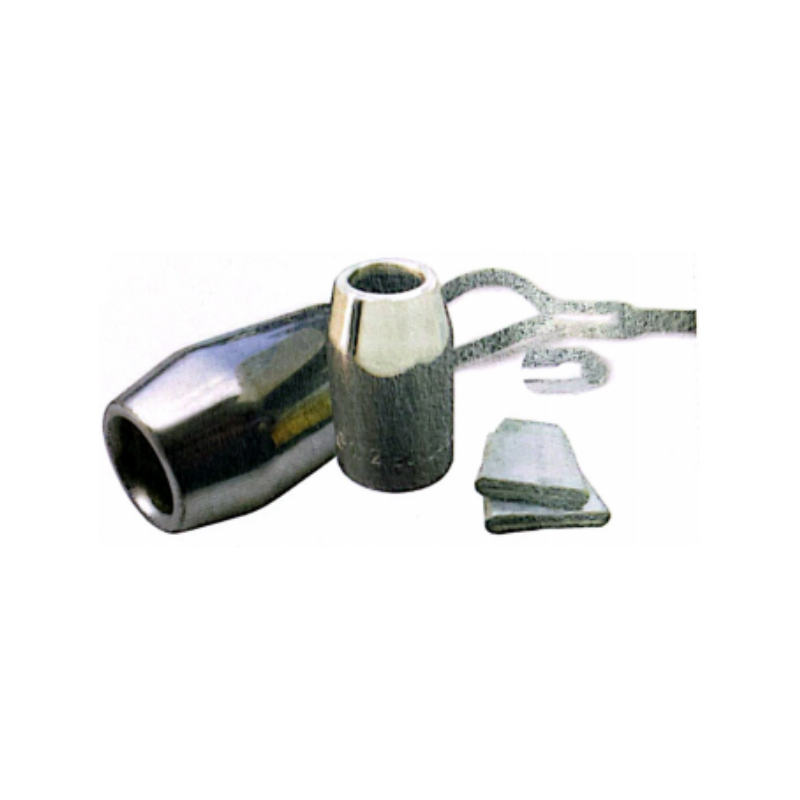
An oval aluminium ferrule wire rope eye termination — also described in standards as a ferrule-secured eye termination (FSET) — is the most widely used method for forming a permanent, load-bearing loop at the end of a wire rope. The technique uses a seamless oval aluminium sleeve that is compressed around both the live end and the returned tail of the wire rope, binding them together under controlled mechanical pressure to create an eye that can be shackled, hooked, or connected directly to a lifting point.
The oval profile of the ferrule is central to its function. The flattened cross-section allows both wire rope legs to lie side by side within the bore, ensuring the compression force is applied evenly across both strands during swaging. This geometry distinguishes the oval ferrule from round stop-sleeves, which are designed only as rope end-caps rather than for forming structural eye loops.
Why Oval Aluminium Is the Industry Standard for Eye Terminations
Oval aluminium ferrules have become the default choice for wire rope eye terminations in lifting sling fabrication for several converging reasons:
- Strength efficiency: A correctly swaged oval aluminium ferrule can achieve up to 100% of the wire rope's rated minimum breaking force. No mechanical efficiency is sacrificed compared to more complex termination methods such as spelter socketing.
- Speed of fabrication: A hydraulic swaging press can complete a single eye termination in seconds. High-volume sling fabricators routinely produce hundreds of assemblies per shift using automated swaging equipment, a throughput not achievable with hand-spliced or resin-filled terminations.
- Compact, inspectable result: The swaged ferrule presents a clearly defined, visually inspectable component. Any cracking, incomplete compression, or slippage of the rope tail beyond the ferrule end is immediately visible during routine pre-use inspection — a significant safety advantage over enclosed socket terminations.
- Regulatory alignment: Ferrule-secured eye terminations are specifically addressed by EN 13411-3 (harmonized from DIN 3093), the governing European standard for wire rope end terminations. Compliance with this standard is a prerequisite for CE marking of lifting slings under the EU Machinery Directive.
- Weight advantage: Aluminium is approximately one-third the density of steel. For multi-leg slings used in overhead crane work, the cumulative weight saving across multiple ferrules meaningfully reduces the sling's dead weight and eases manual handling during rigging operations.
Forms of Oval Aluminium Ferrule: Form A and Form B
EN 13411-3 defines two ferrule forms for wire rope eye terminations, each suited to slightly different fabrication requirements:
| Feature | Form A (Standard Oval) | Form B (Extended Oval) |
|---|---|---|
| Body length | Shorter, compact | Longer, extended |
| Number of swage positions | Typically 2–3 crimps | Typically 3–5 crimps |
| Preferred use | General sling fabrication, smaller rope diameters | Larger diameters, higher duty cycles, offshore applications |
| EN 13411-3 compliance | Yes | Yes |
A third variant — the double-barrel (hourglass) ferrule — is sometimes described alongside the standard oval types. The hourglass shape creates two adjacent bores by compressing the centre of the ferrule before installation, making it simpler to guide both wire rope ends through separate channels before forming the eye. The holding performance is comparable to standard oval ferrules when correctly swaged, though hourglass ferrules are not explicitly defined within EN 13411-3 and should be evaluated against equivalent test criteria if used in rated lifting assemblies.
Step-by-Step Guide to Making an Oval Aluminium Ferrule Eye Termination
Producing a reliable wire rope eye termination requires correct preparation, accurate component selection, and properly calibrated swaging equipment. The following procedure outlines best practice for single-loop eye formation with a thimble, which is the most common configuration for lifting slings:
- Verify component compatibility. Confirm that the ferrule size number matches the nominal diameter of the wire rope. Check that the wire rope grade (typically 1570–1960 N/mm² for galvanized round strand rope) falls within the range covered by the ferrule's EN 13411-3 test certification.
- Prepare the wire rope end. Cut the rope with a wire rope cutter, rotary abrasive disc, or hydraulic guillotine. Avoid flame-cutting, which fuses wire strands together and creates an irregular end that cannot be cleanly inserted into the ferrule bore. Lightly tape the cut end with adhesive tape before insertion to prevent strand splaying during handling.
- Measure and mark the tail length. Calculate the minimum tail length required: EN 13411-3 specifies the protruding tail must be at least equal to the rope diameter after swaging. Mark this position on the rope with a marker pen so it is visible during assembly.
- Thread the ferrule onto the rope. Slide the ferrule onto the live end of the wire rope before forming the eye. The ferrule cannot be added after the eye is formed.
- Form the eye with the thimble. Introduce the thimble into the loop of the wire rope. Pull the rope tight into the thimble groove. The thimble prevents the eye from collapsing under point loads and protects the wire rope from kinking at the termination point. Ensure the thimble size matches the rope diameter — an oversized thimble allows the rope to work loose, while an undersized thimble creates a tight-radius bend that fatigue-cracks wire strands.
- Position the ferrule. Slide the ferrule to the base of the thimble so both rope legs — the live end and the dead tail — pass through the ferrule bore. The ferrule should sit flush against the thimble crown. Push it snugly so no gap remains between the ferrule and thimble.
- Swage the ferrule. Place the assembly into the hydraulic press fitted with the correctly sized die set for the ferrule. Apply the first crimp in the centre of the ferrule body. Apply subsequent crimps progressing outward toward both ends. Never begin swaging at the ends of the ferrule: starting at the ends traps metal in the centre and can cause longitudinal cracking. For ferrules requiring more than three crimps, follow the press manufacturer's die positioning chart.
- Inspect the completed eye termination. Measure the swaged dimensions against the die manufacturer's specification. Confirm: no cracking or splitting of the ferrule body; rope tail protrudes at least one rope diameter beyond the ferrule exit; the eye is correctly formed with the thimble fully seated; no kinking or bird-caging of the rope at the entry to the ferrule.
Compatible Wire Rope Types for Oval Aluminium Ferrule Eye Terminations
EN 13411-3 specifies that oval aluminium ferrule eye terminations are validated for bright or galvanized single-layer steel wire ropes with round strands, covering rope grades from 1570 to 1960 N/mm². This encompasses the most widely used lifting sling constructions, including 6×19, 6×36, and 8×19 rope classifications.
Stainless steel wire ropes are not recommended for use with aluminium ferrules in corrosive environments. The electrochemical potential difference between aluminium and stainless steel creates a galvanic couple that accelerates aluminium corrosion when moisture is present. For stainless steel rope in marine or chemical plant environments, copper or stainless steel ferrules are the correct material selection. Galvanized wire rope and aluminium ferrules, by contrast, form an electrochemically compatible pairing because the zinc coating on the rope shares a similar potential to aluminium, making this combination inherently resistant to galvanic attack.
Common Mistakes and How to Avoid Them
Even with compliant components, incorrect technique produces terminations that fail below the rated load. The most frequently observed installation errors include:
- Wrong ferrule size: Using a ferrule that is one size too large results in insufficient compression during swaging. The bore remains slightly oversize after pressing, allowing the rope to slip under load.
- Swaging from the ends inward: Beginning at the outer ends of the ferrule traps material in the centre, producing an internally stressed, barrel-shaped ferrule that may crack longitudinally.
- Insufficient tail length: A tail that does not protrude beyond the ferrule exit provides no visible sign of rope slippage and removes the safety margin if the termination is loaded beyond proof load.
- Worn or incorrect dies: Swaging dies wear over time, producing undersize crimps that appear visually acceptable but do not develop full holding force. Dies should be dimensionally verified against the ferrule manufacturer's press specification at regular intervals.
- Omitting the thimble: A bare eye without a thimble concentrates bending load at a tight radius at the base of the ferrule. Under repeated dynamic loading, this initiates wire fatigue fractures adjacent to the ferrule entry — a failure mode that develops without visible warning.
Inspection and Service Life of Ferrule-Secured Eye Terminations
Wire rope slings with aluminium ferrule eye terminations must be inspected before each use and formally examined at defined periodic intervals under the applicable lifting regulations. During inspection, look for the following discard conditions:
- Visible cracking, splitting, or distortion of the ferrule body.
- Rope tail no longer visible at the exit end of the ferrule, indicating slippage has occurred.
- Kinking or bird-caging of the wire rope at the ferrule entry point.
- Wire rope corrosion, broken wires, or wear exceeding the percentage limits defined in the applicable standard (typically ISO 4309 for crane ropes, EN 13414-1 for slings).
- Deformation or loss of the thimble, including thimble rotation within the eye indicating rope relaxation.
Ferrule-secured eye terminations are not reusable. Once a ferrule has been swaged, the aluminium has been permanently work-hardened and cannot be re-compressed onto a new rope or expanded to release the original rope. A sling that is cut, reterminated, or repaired must be re-inspected and re-certified as a new assembly before returning to service.
For technical support on wire rope termination components and product availability, visit our industry news section or reach out through our contact page to speak with our product specialists.
Related Products
-
 View More
-
 View More
ASTM A1023 Galvanized 7X7 7X19 Small Diameter Flexible Specialty Wire Rope
-
 View More
18×7 and 18×19 Steel Wire Rope ISO 2408 Class – Non-Rotating Rope
-
 View More
6×7 Steel Wire Rope ISO 2408 Class – High Tensile Strength Galvanized Wire Rope
-
View More
6×19M Steel Wire Rope ISO 2408 Class – Flexible & Durable Wire Rope
-
 View More
6×24 Steel Wire Rope ISO 2408 Class – High-Flexibility Wire Rope with FC Core
Contact Us
-

-
 +86-13395162883 / +86-0510-86361180
 -
 No. 25 Xizhang Road, Changshou Village, Zhouzhuang Town, Jiangyin City, Wuxi City, Jiangsu Province, China


- Quick Links
- Product Categories
- Wire Rope
- Wire Rope Fittings
- Chain
- Wire Rope Accessories
- Packaging Types

Message Us Now !
