


 English
DIN 3093 Aluminium Ferrule | EN 13411-3 Wire Rope Swaging Sleeves
Content
- 1 What Is a DIN 3093 Aluminium Ferrule?
- 2 Material Composition and Manufacturing Process
- 3 DIN 3093 Size Range and Dimensional Specifications
- 4 Key Performance Requirements Under EN 13411-3
- 5 Application Industries and Use Cases
- 6 How to Install a DIN 3093 Aluminium Ferrule Correctly
- 7 DIN 3093 vs. Other Wire Rope Termination Methods
- 8 Quality Assurance and Procurement Considerations
What Is a DIN 3093 Aluminium Ferrule?
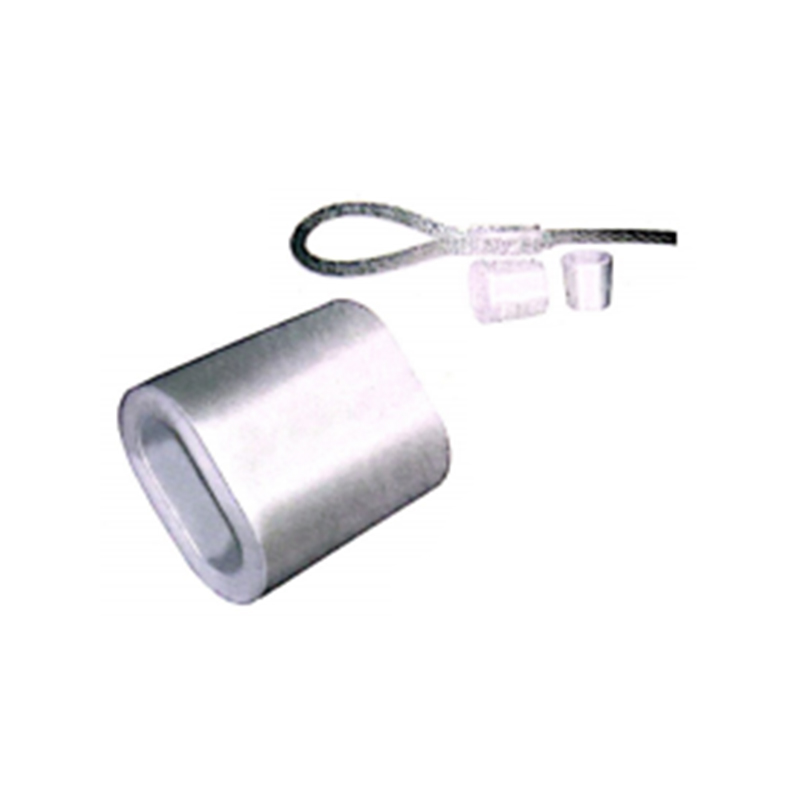
A DIN 3093 aluminium ferrule is a standardized oval swaging sleeve used to create permanent, high-strength eye terminations on wire rope assemblies. Manufactured from seamless aluminium alloy tubing, these ferrules are compressed (swaged or crimped) onto the wire rope to form a secure loop that resists fatigue, abrasion, and slippage under load.
The designation "DIN 3093" refers to the original German industrial standard (Deutsches Institut für Normung) that defined the dimensional and material requirements for aluminium wire rope ferrules. Today, this standard has been harmonized with the European safety standard EN 13411-3, making DIN 3093 and EN 13411-3 essentially interchangeable references in the rigging and lifting industry. Products marked as DIN 3093 comply fully with EN 13411-3, and engineers and procurement teams may use either designation when specifying components.
Material Composition and Manufacturing Process
DIN 3093 ferrules are produced from seamless aluminium alloy tubing, typically AW-5051A in accordance with EN 573-3. The seamless manufacturing process — where aluminium is extruded over a mandrel without welding — is fundamental to performance. Welded sleeves introduce a heat-affected zone that weakens the material; seamless construction eliminates this risk, delivering uniform wall thickness and consistent mechanical properties throughout the entire sleeve.
The aluminium alloy selected for DIN 3093 ferrules balances three critical properties: sufficient ductility to deform uniformly during crimping without cracking; adequate tensile strength to retain the wire rope under rated loads; and natural corrosion resistance that makes these ferrules suitable for outdoor, marine-adjacent, and industrial environments without additional coatings.
Unlike copper or stainless steel ferrules used in specialized applications, aluminium ferrules are the preferred choice for galvanized wire rope slings because aluminium and zinc have compatible electrochemical potentials, minimizing the risk of galvanic corrosion at the contact interface.
DIN 3093 Size Range and Dimensional Specifications
DIN 3093 aluminium ferrules are available across a broad size range to accommodate wire ropes from small-diameter architectural cables to heavy-duty lifting slings. Standard production sizes run from 1 mm to 60 mm wire rope diameter, with custom manufacturing available for ropes above 60 mm and below 3 mm for specialized applications. The ferrule number corresponds directly to the nominal wire rope diameter it is designed to accept, simplifying selection.
| Ferrule Size (mm) | Wire Rope Diameter (mm) | Typical Application |
|---|---|---|
| 2 – 4 | 2 – 4 | Architectural cables, fall arrest lanyards |
| 5 – 10 | 5 – 10 | Light rigging, safety nets, tensioning systems |
| 12 – 20 | 12 – 20 | Wire rope slings, crane rigging, marine anchoring |
| 22 – 36 | 22 – 36 | Heavy lifting slings, mining, offshore mooring |
| 40 – 60 | 40 – 60 | Industrial hoisting, large crane assemblies |
When selecting a ferrule, always match the ferrule size number to the actual wire rope diameter rather than its breaking load rating. Using an oversized ferrule prevents proper compression during swaging and significantly reduces the effective holding strength of the termination.
Key Performance Requirements Under EN 13411-3
EN 13411-3 (the harmonized successor to DIN 3093) defines four test cases that a properly swaged ferrule-secured eye termination must satisfy. These tests verify performance under conditions representing typical industrial use:
- Static tensile test: The completed eye termination must withstand a proof load of 2× the rated working load without permanent deformation or slippage.
- Breaking load test: At minimum, the swaged assembly must reach the wire rope's rated minimum breaking force — the best-performing ferrule designs achieve up to 100% of rope breaking strength.
- Fatigue performance: The termination must endure repeated cyclic loading without failure at a defined fraction of the breaking load, simulating real-world dynamic lifting conditions.
- Slip resistance: The rope must not pull through the ferrule during any stage of testing, confirming the adequacy of the crimp compression applied.
Ferrules bearing EN 13411-3 / DIN 3093 compliance markings have been validated against these criteria, providing the documentary evidence required for CE-marked lifting equipment and regulatory inspection.
Application Industries and Use Cases
DIN 3093 aluminium ferrules are specified across a wide range of sectors wherever wire rope terminations must be permanent, load-rated, and resistant to environmental degradation:
- Marine and offshore: Mooring lines, anchor rodes, and deck rigging where lightweight fittings reduce topweight and the natural corrosion resistance of aluminium provides long service life in saline atmospheres.
- Construction and civil engineering: Wire rope slings for lifting prefabricated elements, formwork tensioning, temporary works anchoring, and safety netting systems at elevated worksites.
- Mining: Hoist ropes, cage guides, and conveyor tensioning systems in underground and open-cut environments where robust, inspectable terminations are a regulatory requirement.
- Fall arrest and personal protective equipment: Lanyards and inertia reels in fall protection systems where EN 13411-3 compliance is mandatory for CE marking.
- Architectural and structural tensioning: Facade cables, tension rod bracing, and canopy support structures in modern building design where the clean, compact profile of oval ferrules suits exposed applications.
- Agricultural equipment: Control cables, implement linkages, and lifting attachments on tractors and farm machinery where lightweight terminations are preferred over bulky mechanical splices.
How to Install a DIN 3093 Aluminium Ferrule Correctly
Correct installation is as important as selecting a compliant ferrule. An improperly crimped ferrule may slip under load even if the component itself meets DIN 3093 dimensional requirements. Follow this procedure to achieve a reliable, standard-compliant termination:
- Select the correct ferrule size. Match the ferrule number to the nominal diameter of the wire rope being used. Confirm that both components — ferrule and rope — carry compatible standard designations.
- Cut the wire rope cleanly. Use a proper wire rope cutter or an abrasive cutting disc. Avoid flame-cutting or shearing methods that splay the rope strands and prevent clean insertion into the ferrule bore.
- Thread the rope through the ferrule. Pass the wire rope through the ferrule bore from the working end side, leaving sufficient tail length to form the required eye size plus a minimum tail length of at least one rope diameter beyond the ferrule after swaging.
- Form the eye loop. Fold the rope back to create the eye. If a thimble is required, seat it inside the loop and draw the rope tight against the thimble groove before positioning the ferrule.
- Position the ferrule at the base of the eye. Push the ferrule snugly up against the base of the thimble (or the fold of the eye) so that both the live and dead ends of the rope pass through the ferrule bore.
- Swage the ferrule. Using a hydraulic swaging press fitted with the correct die set for the ferrule size, apply compression. For ferrules requiring multiple crimps, begin in the centre of the ferrule and work outward toward each end to avoid material buckling.
- Inspect the completed termination. Confirm the ferrule is uniformly compressed without cracking; verify the rope tail protrudes beyond the ferrule end; and check that the eye is properly formed with no kinking at the base.
DIN 3093 vs. Other Wire Rope Termination Methods
Rigging engineers have several termination options, and DIN 3093 swaged ferrules occupy a well-defined position in terms of performance, cost, and permanence. Compared to wire rope clips (U-bolt clamps), a correctly swaged ferrule-secured eye provides a significantly higher efficiency — up to 95–100% of rope breaking strength — whereas wire rope clips rarely achieve more than 80% and require periodic re-tightening. Clips are, however, re-usable and adjustable, making them preferable for temporary applications.
Hand-spliced eyes in natural or synthetic fibre ropes offer similar efficiency but require skilled labour and are not applicable to steel wire rope in industrial settings. Spelter (resin or zinc-cast) sockets achieve 100% rope strength but are expensive, time-consuming to prepare, and suited primarily to permanent structural installations. The DIN 3093 swaged ferrule therefore occupies the practical middle ground: it is fast to install with the correct tooling, delivers near-full rope strength, creates a compact and inspectable termination, and at the ferrule unit cost is economical even for high-volume sling fabrication.
Quality Assurance and Procurement Considerations
When sourcing DIN 3093 aluminium ferrules, prioritise suppliers who provide mill certificates confirming the aluminium alloy composition meets EN 573-3 requirements for AW-5051A. Third-party test reports demonstrating EN 13411-3 compliance for finished ferrule-secured eye assemblies — not just dimensional conformance — give assurance that the product will perform as specified under load.
Seamless construction should be confirmed rather than assumed: some lower-grade ferrules are fabricated from welded tube and may not be identified as such in basic product listings. Ask for cross-sectional microscopy or confirm the manufacturing method with your supplier. For lifting sling fabrication destined for CE marking or third-party inspection, documentation traceability from raw material to finished component is a mandatory requirement, not an optional extra.
For information on related industrial products and our procurement support services, visit our product range or contact our team directly for technical enquiries and volume pricing.
Related Products
-
 View More
-
 View More
EN 12385-4 Class 8×7+FC Steel Wire Rope – 8-Strand Fiber Core Wire Rope
-
View More
35(W)×7+FC Steel Wire Rope – EN 12385-4
-
View More
34(M)×7+FC/IWRC Steel Wire Rope – EN 12385-4
-
 View More
EN 12385-4 Class 6×36WS-IWRC Steel Wire Rope
-
 View More
EN 12385-4 Class 8×19S-IWRC Steel Wire Rope – 8-Strand Seale Construction with IWRC
Contact Us
-

-
 +86-13395162883 / +86-0510-86361180
 -
 No. 25 Xizhang Road, Changshou Village, Zhouzhuang Town, Jiangyin City, Wuxi City, Jiangsu Province, China


- Quick Links
- Product Categories
- Wire Rope
- Wire Rope Fittings
- Chain
- Wire Rope Accessories
- Packaging Types

Message Us Now !
