The Case for Special Steel Wire Rope for Clothes Drying
Anyone who has replaced a sagging nylon clothesline or scrubbed rust stains from freshly washed garments understands the real cost of choosing the wrong drying line material. Synthetic cords—nylon, polypropylene, and braided polyester—are inexpensive at the point of purchase but degrade rapidly under sustained UV exposure, losing up to 40% of their tensile strength within two to three outdoor seasons. Even treated variants stretch permanently under load, requiring constant retensioning and eventual replacement. Special steel wire rope for clothes drying offers a fundamentally different value proposition: a one-time installation that delivers consistent performance across decades without sagging, snapping, or contaminating clean laundry with rust. Built on the same engineering principles that govern industrial lifting, marine suspension, and structural cable systems, this product brings professional-grade durability to an everyday household and commercial application.
Wire Rope Construction: What the Numbers Actually Mean
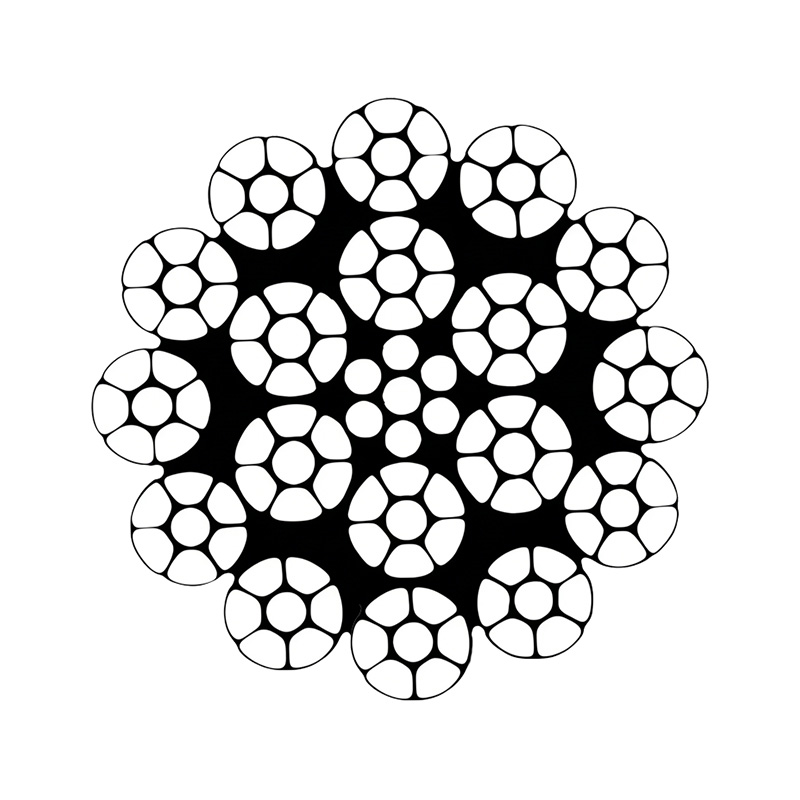
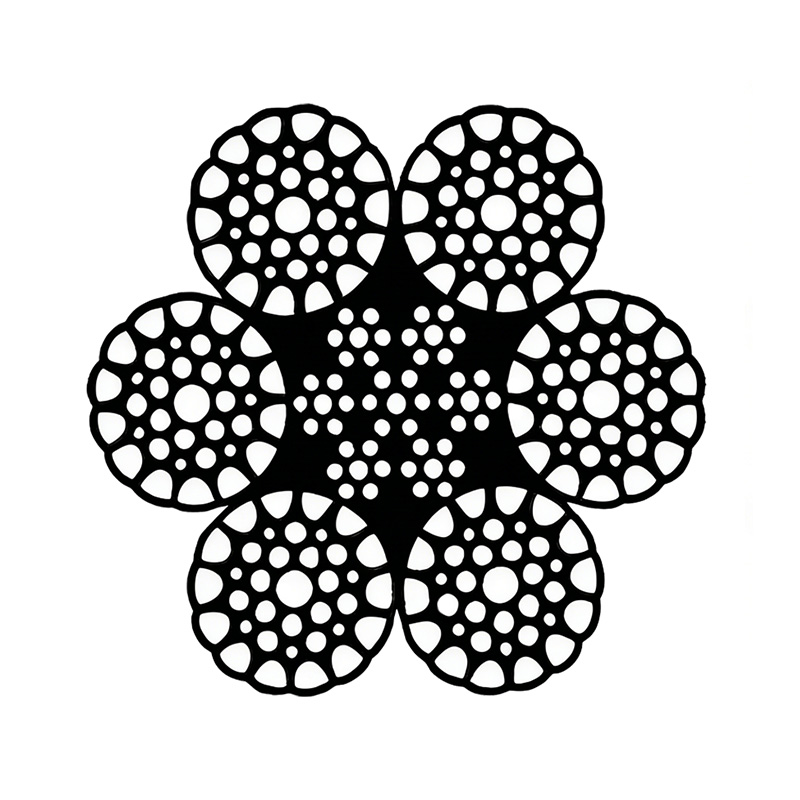
Steel wire rope is manufactured by drawing steel rod into individual wires of precise diameter, twisting groups of those wires into strands, and then helically wrapping multiple strands around a central core. The construction notation—such as 7×7 or 7×19—defines the strand count and the number of wires per strand respectively. These figures directly determine the rope's balance of stiffness, flexibility, tensile strength, and fatigue resistance. For special steel wire rope used in clothes drying installations, two constructions dominate the market and cover virtually every residential and commercial scenario.
- 7×7 Construction: Seven strands of seven wires each, producing a relatively firm rope with excellent shape retention. This construction handles sustained static tension without permanent deformation and is ideal for straight fixed-span drying lines between two anchor points where the rope does not need to flex around pulleys or redirect through hardware.
- 7×19 Construction: Seven strands of nineteen wires each. The higher wire count per strand makes this construction noticeably more pliable, easier to handle during installation, and better suited for retractable systems, wall-mounted pulley arrangements, or any application requiring the rope to bend smoothly around radius-limited hardware without developing kinks or wire fatigue at the bend point.
Core Selection for Drying Line Performance
The core material running through the center of the rope influences both its mechanical behavior and its resistance to environmental degradation. A fiber core (FC) adds flexibility and makes ferrule termination easier, but is marginally more susceptible to moisture infiltration over extended outdoor exposure. An independent wire rope core (IWRC) maintains a more stable circular cross-section under tension and resists radial crushing when tension is applied at varying angles—a useful characteristic for longer commercial spans or permanently installed outdoor lines subject to wind-induced lateral loading. For most domestic drying lines spanning 3–8 meters, a fiber core in 2–4 mm diameter provides more than adequate performance. For spans exceeding 8 meters or commercial laundry installations carrying sustained heavy loads, an IWRC construction in 4–6 mm diameter is the more reliable specification.
Stainless Steel Wire Rope: The Definitive Material Choice
Among all available surface treatments and base materials, stainless steel wire rope has established itself as the premium specification for clothes drying applications—and for well-founded technical reasons. Galvanized carbon steel rope provides solid corrosion protection when the zinc coating remains intact, but the coating is vulnerable to scratching from clothespin hardware, abrasion against masonry surfaces, and gradual chemical attack from detergent residue in dripping water. Once the zinc is compromised, rust develops rapidly from the exposed carbon steel core and transfers directly onto clean garments. Stainless steel wire rope carries no such risk. Its corrosion resistance is inherent throughout the entire wire cross-section, not dependent on an intact surface layer, making it immune to the localized coating damage that causes galvanized rope to fail prematurely in active use.
Grade 304 vs. Grade 316: Matching the Material to the Environment
Stainless steel wire rope is produced in two grades most relevant to drying line procurement, each suited to distinct environmental conditions:
- AISI 304 (18% chromium, 8% nickel): The standard austenitic grade offering excellent resistance to atmospheric moisture, detergent chemicals, and general outdoor exposure. This is the correct and cost-effective specification for inland residential properties, urban apartment buildings, and commercial laundry facilities in normal humidity environments. Expected service life under these conditions routinely exceeds 15–20 years with minimal maintenance.
- AISI 316 (with 2–3% molybdenum addition): The enhanced marine-grade alloy specifically engineered to resist chloride-induced pitting corrosion—the failure mode that causes Grade 304 to deteriorate in salt-laden environments. Grade 316 stainless steel wire rope is essential for coastal properties, rooftop installations exposed to sea spray, and any location where road salt aerosol or industrial chloride contamination is present. Its service life under these aggressive conditions can exceed 25 years, far outpacing the economics of any alternative material.
Surface Treatment Options and How They Affect Daily Use
Special steel wire rope for clothes drying is available across a range of surface configurations. The table below provides a practical comparison to help buyers select the right specification for their environment and budget:
| Surface Type |
Corrosion Resistance |
Garment Safety |
Typical Lifespan |
Recommended Use |
| Stainless Steel 304 |
Very High |
Excellent |
15–20+ years |
Inland residential & commercial |
| Stainless Steel 316 |
Outstanding |
Excellent |
25+ years |
Coastal & marine climates |
| Hot-Dip Galvanized |
High |
Moderate |
8–12 years |
Budget outdoor installations |
| PVC-Coated Steel |
High (if coating intact) |
Very Good |
6–12 years |
General residential lines |
PVC-coated steel wire rope warrants specific attention for direct-contact drying applications. The polymer sheath prevents bare metal from touching garments and eliminates any rust stain risk while providing a softer gripping surface for clothespins. The critical limitation is coating integrity: once the sheath is cut, abraded, or cracked by UV exposure or hardware contact, moisture reaches the steel core and corrosion proceeds invisibly beneath the surface. Inspect PVC-coated lines thoroughly at least twice per year and replace any section where the coating shows cracking, splitting, or exposed metal without delay.
Correct Installation Techniques for Maximum Service Life
Even the highest-grade stainless steel wire rope for clothes drying will underdeliver if installed incorrectly. Anchor each end to a structurally verified fixing point capable of sustaining at least 150 kg—suitable options include a masonry anchor bolt set in solid brick or concrete, a galvanized steel post embedded in a concrete footing, or a stainless through-bolt with backing plate in a hardwood beam. Use a stainless steel turnbuckle or inline tensioner to apply consistent tension after installation is complete. A correctly tensioned drying line deflects no more than 25–30 mm under the weight of a full load of wet laundry. Excessive tension overloads anchor fixings; insufficient tension allows the rope to sag and contact walls, fences, or the ground.
Termination method is equally critical. Never tie a knot in steel wire rope—knotting reduces the rope's breaking strength by up to 50% and permanently deforms the helical wire structure at the bend point, creating a fatigue initiation site that will fail under repeated loading. Instead, use swaged ferrule loop terminations: an appropriately sized aluminum or copper ferrule is compressed over a doubled-back rope end with a hand swaging tool, producing a termination that retains 95% or more of the rope's rated minimum breaking load. Fit a stainless steel thimble inside every loop to distribute the bearing load across the rope body and protect the wires from the sharp bending stress that would otherwise develop at direct hardware contact points. Match all hardware—hooks, shackles, carabiners, and turnbuckles—to the same stainless grade as the rope to prevent galvanic corrosion at the metal interface.
Sourcing Quality Wire Rope From a Specialist Manufacturer
Product quality in steel wire rope is determined as much by manufacturing process discipline as by raw material specification. Dimensional inconsistencies in wire drawing, inadequate strand closing tension, and poorly controlled surface treatment processes all reduce the rope's fatigue life and corrosion resistance below what the material grade specification implies. Sourcing special steel wire rope for clothes drying from a manufacturer with proven expertise and rigorous quality systems is therefore not a secondary consideration—it is central to getting the performance the specification promises.
Jiangyin General Metals has always been specialised in the field of steel wire rope manufacturing, bringing focused technical depth to every product in its range. The factory covers an area of 20,000 square metres and employs more than 200 people, including more than 20 engineers and technicians who oversee process development, quality control, and customer technical support. Equipped with advanced equipment and a total quality control system that governs every stage from raw wire drawing through final rope closing and surface treatment application, the facility ensures that stainless steel wire rope supplied for drying line applications consistently meets the dimensional, mechanical, and corrosion-resistance requirements that demanding global markets expect. With strong international supply capability and the engineering resources to support custom specifications, Jiangyin General Metals is a manufacturing partner that delivers both the product quality and the supply reliability that importers and distributors require.


 English
  View More
 View More
 View More

 +86-13395162883 / +86-0510-86361180
 No. 25 Xizhang Road, Changshou Village, Zhouzhuang Town, Jiangyin City, Wuxi City, Jiangsu Province, China