Content
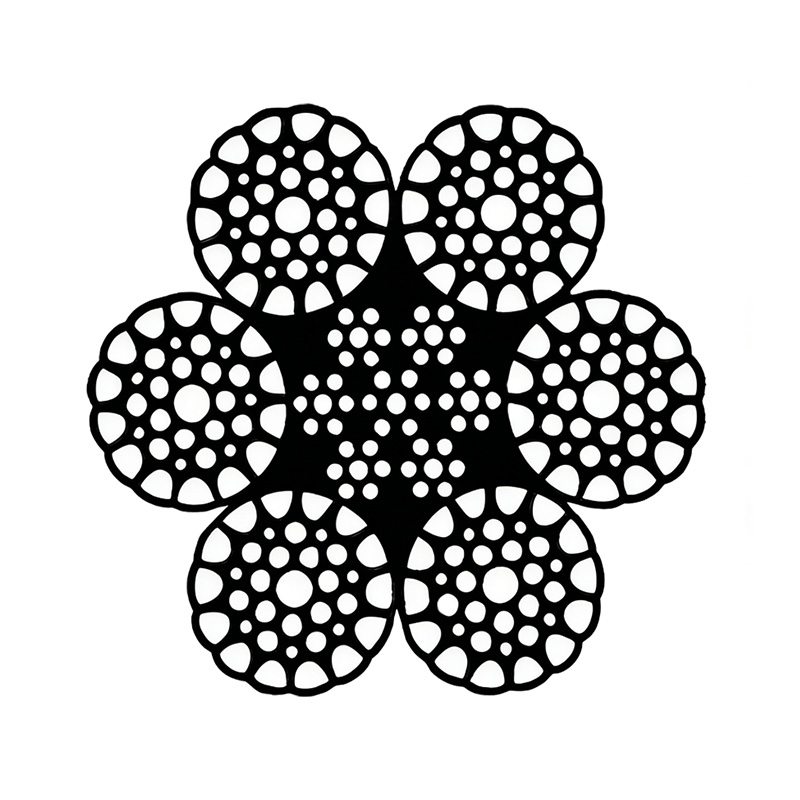
A 6x19 fiber-core rope and a 6x36 IWRC rope can share the same diameter, the same shackle, and the same catalogue page, yet behave like different tools in service. One may tolerate abrasion better; the other may survive small sheaves and repeated bending longer. That is why the construction of wire rope is a design decision, not a line item.
Direct answer: construction is the controlled combination of wire grade, strand count and pattern, core type, lay direction, and finish. That build determines strength, fatigue life, abrasion tolerance, rotation behavior, and how the rope tracks on a drum or sheave. Buyers who specify only diameter and breaking force leave the most expensive variables uncontrolled.
In practice, a rope designation is a compressed specification. “6x19 FC” tells you there are six strands, roughly nineteen wires per strand, and a fiber core. It does not tell you the wire tensile grade, lay length, preforming condition, lubrication, or whether the outer wires are compacted. Two ropes with the same printed class can still differ in fatigue life if those details change. A practical starting point is to compare the wire rope product range by construction class, then narrow by core, lay, and finish.
 6×19 ISO 2408 Multi-Strand Steel Wire RopeCompare 6×19S, 6×19W, and 6×26WS constructions with FC or IWRC cores across 6–60 mm diameters and tensile grades to 2160 MPa.View Product →
High-carbon steel is common for strength; stainless grades trade some strength for corrosion resistance. Wire diameter tolerance and surface condition influence fatigue, abrasion, and whether the rope runs quietly.
Strand pattern controls the balance between flexibility and abrasion resistance. More, smaller wires improve bending fatigue; fewer, larger wires improve surface wear resistance.
Fiber core supports the strands and retains lubrication but adds little breaking force. Independent wire rope core adds strength and crush resistance, often at the cost of flexibility.
Lay direction and lay length affect rotation, fatigue, and handling. A long lay may improve abrasion resistance; a shorter lay can improve flexibility but may increase wire-to-wire contact.
Construction is not created at the closing machine alone. It is built through a chain of process choices. A change early in the chain can alter the final rope diameter, breaking force, and fatigue behavior, even when the catalogue designation stays the same.
A small change in lay length or core size can change finished diameter and fit. That matters when a replacement rope must run in an existing groove, sheave, or termination. For procurement, the construction sheet should travel with the order: strand pattern, core, lay, wire grade, finish, minimum breaking force, and governing standard.
The matrix below is directional, not a substitute for a manufacturer’s data sheet. It shows why two ropes with the same diameter can be specified for very different duty cycles.
Breaking force is easy to compare and easy to over-weight. In service, fatigue cycles, abrasion loss, crush resistance, and rotation behavior often decide the changeout interval. The bars below are an illustrative index, not a guaranteed performance ratio. They show why a rope can look strong on paper and still disappoint in a small sheave or a dirty drum.
Index used here: relative fatigue life under repeated bending on a moderate sheave. Higher is better. Actual values depend on sheave ratio, load spectrum, lubrication, and inspection interval.
Preforming, lay length control, and lubrication can shift fatigue life more than a small change in headline breaking force. If the application involves reverse bending, tight sheaves, or high cycle counts, ask for fatigue data and field references, not only a minimum breaking force table.
For construction and hoisting applications, the decision usually starts with duty cycle and sheave geometry, then moves to rotation and corrosion. A single-part lift with a free load may need a rotation-resistant construction; a multi-part reeved system may prioritize fatigue and crush resistance instead.
Illustrative specification mix for a general wire-rope catalogue, not market research. Use your own order history to weight the mix.
A rope that costs 15% more but doubles the changeout interval can lower cost per operating hour, but only if the dominant failure mode is fatigue rather than abrasion or impact. The cheapest rope per meter is rarely the cheapest rope per lift.
Record load, cycles per shift, reverse bends, and shock loads. This sets the fatigue target before diameter is chosen.
Check sheave, drum, and groove dimensions. A rope that is too stiff for the sheave will fail by fatigue before its breaking force is reached.
Single-part lifts and free loads may need rotation-resistant construction; multi-part systems may gain more from fatigue and crush resistance.
Match core type to strength and crush needs. Match finish to humidity, salt, chemicals, and indoor or outdoor exposure.
Confirm the governing standard, minimum breaking force, tolerance, and test certificate. Do not rely on a generic class name alone.
Divide purchase and installation cost by expected service hours. Include downtime, inspection labor, and risk of unplanned replacement.
6×19M-WSC EN 12385-4 Steel Wire RopeReview 6×19M-WSC rope in 3–12 mm diameters with 1770 or 1960 MPa grades for general industrial uses where steel-core support and moderate flexibility matter.View Product →
A simple ROI check is: (rope cost + termination cost + downtime cost) divided by expected service hours. If the rope is replaced early because of broken wires near a termination, the real issue may be termination practice or sheave alignment, not rope price.
Construction choices set the baseline, but service life is protected by inspection and documentation. A practical inspection routine should track diameter reduction, broken wires, corrosion, lubrication condition, and termination integrity. Discard criteria should follow the applicable standard and the rope manufacturer’s instructions, not a single visual check.
 ASTM A1023 6X19 Steel Core High Breaking Force Lifting Wire RopeThe ASTM A 1023 classification 6x19 fiber core steel wire rope is a high-quality product with well-defined construction features. It consists of 6 strands, with each s...View Product →
Procurement teams should separate commercial questions from engineering questions. Price per meter, lead time, and packaging belong in the purchase order; strand pattern, core, lay, finish, and standard belong in the technical specification. When those two lists are mixed, suppliers quote a rope that meets the price but not the duty.
A good wire rope purchase order does not ask for “steel wire rope” alone. It states the construction, core, lay, finish, standard, and expected duty cycle. That level of detail is what turns a catalogue number into a rope that fits the drum, survives the sheave, and reaches a predictable changeout interval.
View More
 View More
 View More
 View More








 English
 Português
