Content
For overhead lifting, use a chain fall. For horizontal pulling, tensioning, or short-travel positioning, use a come along. The two tools solve different load-control problems, and treating them as interchangeable is where many costly and dangerous mistakes begin.
Bottom line: a chain fall is a lifting device with a load brake and a vertical load path. A come along is a pulling device, often a lever hoist, designed to move a load along the ground or apply tension. Check the rating plate, the brake, and the anchor before either tool leaves the shelf.
The loose use of “come along” causes much of the confusion. In some workshops the word means a lever hoist with a rated lifting capacity. In others it means a cable puller with hooks and a ratchet, which is not automatically rated for overhead lifting. That distinction matters more than capacity alone.
A chain fall, also called a manual chain hoist or chain block, uses a hand chain, a load chain, a gear train, and a load brake. Pulling the hand chain raises the load; releasing the hand chain lets the brake hold it. It is built for vertical lifting, with capacities commonly from 0.5 t to 20 t and lift heights from about 1 m to 30 m. The load chain, hooks, and brake are the parts that decide whether the lift stays controlled.
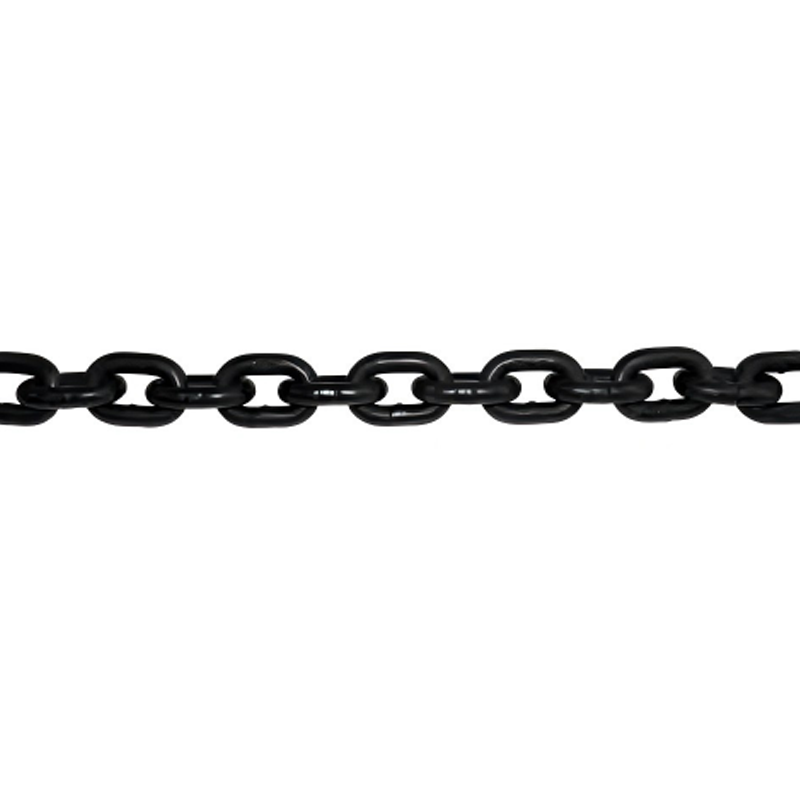 Grade 80 Heat-Treated Alloy Overhead Lifting ChainProof-load-tested Grade 80 chain for hoists, cranes, and sling assemblies, with rated working loads and overhead lifting standard compliance.View Product →
A come along uses a lever, ratchet, and drum or chain to pull in short increments. Typical lever hoists run from 0.75 t to 6 t and are useful for pulling a load along a floor, aligning machinery, or tensioning a line. A cable puller may look similar but may carry no lifting rating at all. If the label does not state a lifting rating and a recognized standard, do not use it overhead.
Best for vertical lifts, holding a load at height, and smooth lowering. The load brake and the condition of the load chain are central to safe use.
Best for horizontal pulls, tensioning, and short travel. The lever gives control, but the tool is not a substitute for a rated hoist when the load must be held overhead.
Hooks without latches, damaged anchors, worn chain, contaminated brakes, and side loading cause problems on both tools. Inspect the endpoints before the mechanism.
Purchase price is not the main cost. The hidden metrics are inspection findings, brake reliability, chain wear, and operator error. In a shop audit sample, the most common findings cluster differently for the two tools: chain falls tend to show load-chain wear and hook damage, while come alongs tend to show brake slip, pawl issues, and rope or chain damage from dirty pulling jobs.
Those findings change the real cost of ownership. A chain fall with a worn load chain can fail inspection long before the gearbox is worn out. A come along used in grit and water can lose brake grip while the body still looks serviceable. A common shop trigger is 1.5% chain elongation or 10% link wear, but the hoist maker’s discard limit always governs. Every extra metre of lift also adds hand-chain travel, and every extra tonne adds operator effort.
The split below is an indicative planning view of manual pulling and lifting use in maintenance-heavy operations, not a market statistic. It helps explain why both tools stay in the same crib even when one is technically a hoist and the other is a puller.
In maintenance, a come along is often the better choice for aligning a motor, pulling a shaft, or tensioning a belt line. A chain fall is the better choice for lifting a pump or holding a component while it is bolted. In construction and rigging, the chain fall stays on overhead work; the come along handles guying and positioning. In manufacturing, the same pattern repeats: pulling and tensioning on one side, controlled vertical lift on the other.
Use this sequence before buying, renting, or assigning either tool. It keeps the decision tied to the load path rather than to habit.
If the load must go up and stay up, start with a chain fall. If the load must move horizontally or be tensioned, start with a come along.
Look for a marked capacity, a lifting rating, and the applicable standard. For lever hoists, check ASME B30.21; for overhead hoists, check ASME B30.16.
Check hook throat, anchor point, shackle, and sling. A rated tool attached to an unrated anchor is still an unrated lift.
Check hook latches, brake action, chain wear, rope damage, and pawl engagement. Remove any tool with a cracked hook or a brake that slips.
Do not side-load a chain fall unless the maker allows it. Do not use a pulling tool for overhead lifting unless it is rated for that duty.
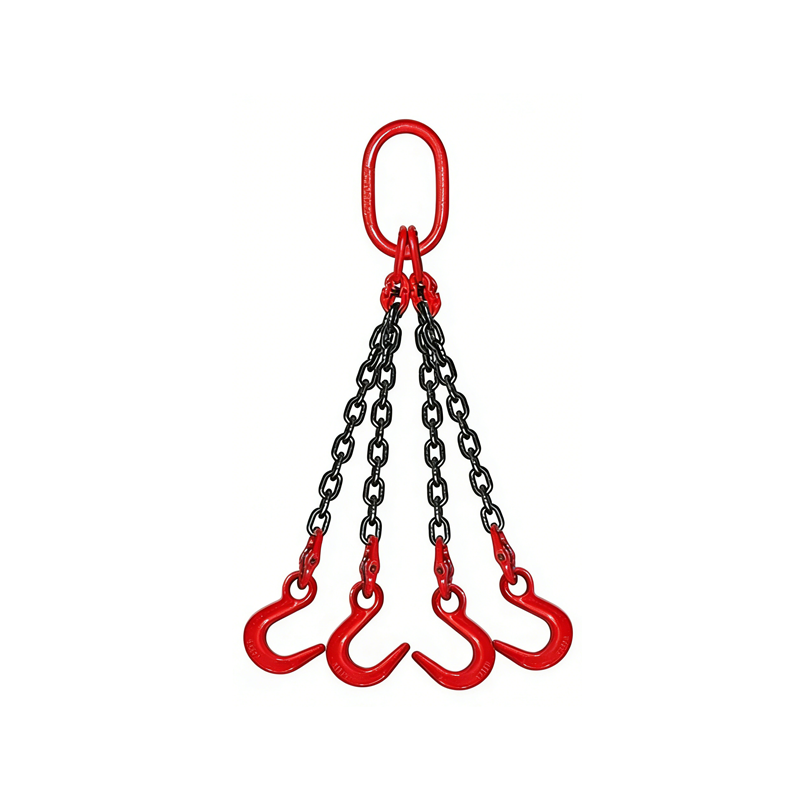 Four-Leg Alloy Chain Sling with Forged Open HooksEqual-length Grade 80 legs and forged hooks distribute multi-point loads, with proof-tested assemblies, rated capacities, and traceability for heavy rigging.View Product →
The ROI argument is simple: the lowest-cost choice is the tool that matches the task and passes inspection. A cheap come along used for overhead lifting is not a saving; it is an unrated lift with a hidden failure path. A chain fall with the wrong lift height or hook configuration creates the same problem in a different form.
Treat inspection as a scheduled task, not a reaction to failure. Chain falls and come alongs live in dirty, busy environments, so the inspection routine should follow the failure pattern of each tool.
For a deeper wear-limit checklist, see our chain sling inspection guide. If you are specifying replacement chain, hooks, or slings for a pulling or lifting job, contact our team.
 View More
 View More
 View More
View More
 View More








 English
 Português
