


 English
Chain Sling Inspection: A Practical Guide to Wear Limits, Tags, and Records
Content
A two-leg Grade 80 sling has been lifting steel plate in the same bay for four years. It gets a glance every morning, nobody writes anything down, and the identification tag disappeared sometime in year two. Then a leg drops a load. The first question in the investigation is not what broke. It is when the sling was last inspected, by whom, and where the record is. When that answer does not exist, a hardware failure becomes a documentation failure as well, and the paperwork is usually the more expensive of the two.
The short answer
A chain sling inspection program rests on three things: a documented periodic inspection by a competent person at least once every 12 months under OSHA 29 CFR 1910.184, a visual check before every lift, and immediate removal from service when a link shows significant wear, a crack, a bend or a permanent stretch, heat damage, or a missing or illegible identification tag.
Everything else, the forms, the colour codes, the log sheets, exists to support those three. Get them right and the admin becomes routine. Get them wrong and no amount of paperwork will protect the sling or the person standing under it.
The practical difficulty is that chain fails slowly, then all at once. A sling that has been degrading for two years looks almost identical to one that has been degrading for two weeks. The only way to tell them apart is to measure, write the number down, and compare it against the last one. That is why inspection and record-keeping are the same job, not two separate jobs.
Three Inspection Layers, Not One
The standards do not ask for a single inspection. They ask for three different ones, on three different clocks. Confusing them is the most common program failure: a shop performs a careful annual inspection and then skips the daily check, or it does a good daily check and never puts a competent person's name on a document.
1. Pre-use, every shift
Before the first lift of the day, sweep the whole assembly with your eyes: chain, master link, hooks, latches, tag. This is a visual check, not a measurement. You are hunting for the obvious, a bent link, a hook with a missing latch, rust blooming out of a crack, a tag that has been painted over.
2. Periodic, at least yearly
A competent person inspects and documents the sling. Alloy steel chain slings must be inspected at least once every 12 months, and the record of the most recent inspection has to be kept. The interval shortens where service is severe: heat, corrosive atmospheres, heavy duty cycles, or slings that move between crews.
3. Special, post-incident
After a shock load, a dropped load, an arc strike, or any period out of service, inspect before the next lift. Chain does not recover. A sling that was overloaded yesterday is a different sling today, even if it looks identical.
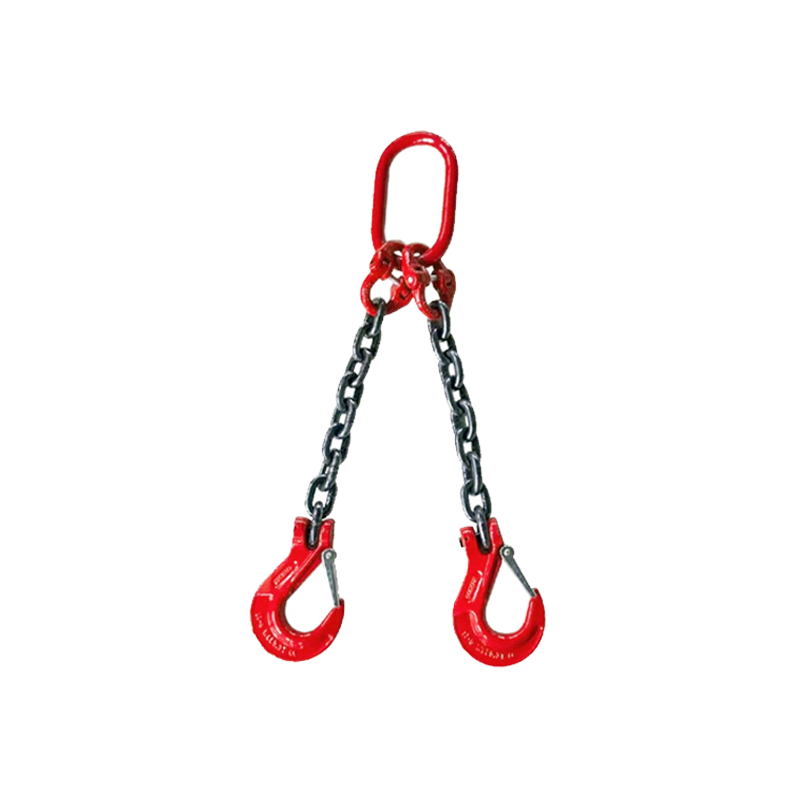 Leg Chain Sling with Swivel Safety Hooks and Master EqualizerReview this two-leg assembly when inspecting a sling after shock or overload, with swivel equalizer, safety hooks, and traceable documentation.View Product →
What Actually Fails, and What Only Looks Rough
Chain slings are genuinely tough, and that toughness is what makes them easy to over-trust. Light surface rust on a galvanised sling, field dirt, and dull colour are cosmetic. The conditions below are not, and each one carries a detection method and a decision with it.
Working summary of the removal conditions commonly applied to alloy steel chain slings; always confirm against ASME B30.9 and your site rules.
The single most useful measurement is link wear, because chain loses steel where link meets link and where link meets hook, and the loss is in the cross-section rather than the outside profile. A caliper reading taken on a worn link and compared with the nominal diameter of an unused one tells you exactly how much material is gone. A sling that is losing reach and a sling that is losing section are both telling you the same thing: the margin has already been spent.
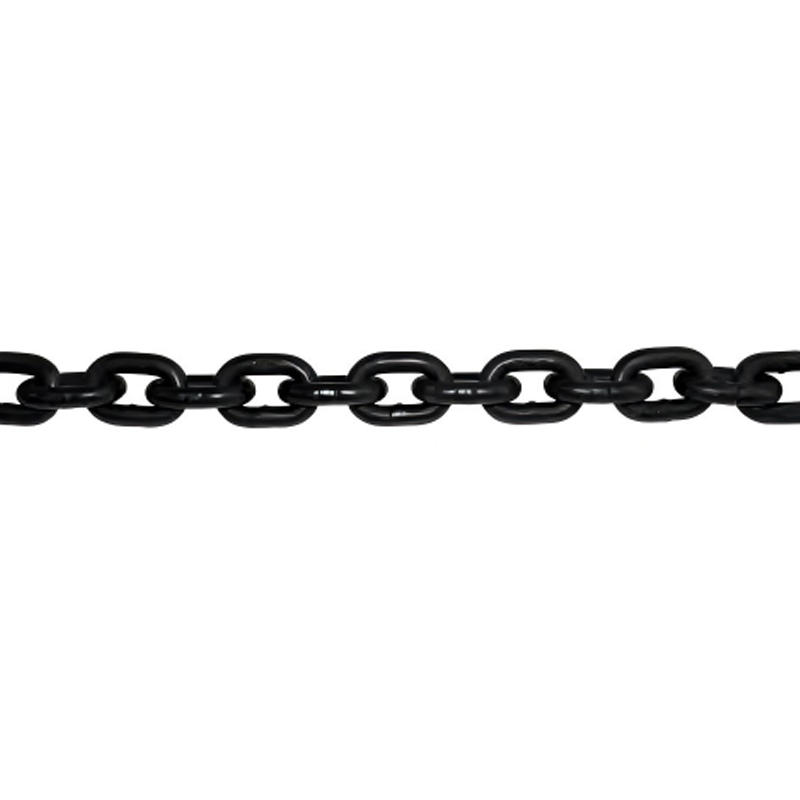 Grade 80 Heat-Treated Alloy Chain for Overhead Lifting and RiggingInspect link wear by caliper against nominal diameter; this proof-tested Grade 80 chain supports overhead lifting and sling builds.View Product →
Reading the Pattern in Inspection Records
Aggregate enough inspection sheets and a pattern emerges that is more useful than any single finding. The distribution below reflects the mix of defects typically documented on alloy chain slings in industrial settings. Your own numbers will shift with duty cycle, environment, and how disciplined the daily checks are, but the shape of the curve rarely changes.
34%
Link wear
22%
Missing tag
16%
Bent links
14%
Hook damage
9%
Heat damage
5%
Cracks
Two things stand out. First, wear and identification failures together account for more than half of removals, and both are process problems rather than abuse problems. Second, genuine cracking is rare, which is exactly why a crack found during a pre-use check should stop the job rather than start a debate. The defect you almost never see is the one that ends the argument about whether the daily check was worth doing.
Where Alloy Chain Slings Work Hardest
Application changes the inspection emphasis more than the sling grade does. The indicative split below shows where alloy chain slings concentrate; note how the risk profile moves from abrasion in one sector to heat and impact in another.
Construction and steel fabrication, 28 percent
General manufacturing and plant maintenance, 24 percent
Ports, shipping, and heavy logistics, 18 percent
Energy, mining, and heavy equipment, 17 percent
Agriculture, utilities, and entertainment rigging, 13 percent
In fabrication shops the enemy is abrasion, so link wear and hook wear dominate. In ports and yards the enemy is shock loading from crane motions and uneven ground, so bent links and stretched reaches show up first. Around welders and furnaces, heat damage and arc strikes jump in frequency. If your inspection form asks the same five questions everywhere, it will miss the defect that your environment actually produces.
Building a Routine That Survives Turnover
Most inspection programs do not fail because the criteria are wrong. They fail when the person who built the system leaves. A routine that survives shift changes, layoffs, and a new maintenance planner looks like this.
Step 1: Tag before first use
Record grade, size, reach, working load limit at the rated angle, and the date the sling entered service. An untagged sling starts its life already out of compliance.
Step 2: Give every sling a home
A named owner and a fixed storage point. A sling that lives on a shared rack belongs to nobody, and a sling that belongs to nobody is inspected by nobody.
Step 3: Post the criteria where the sling hangs
The removal limits should be readable at the rack, not filed in an office binder. Operators check what they can see.
Step 4: Put the yearly inspection on a calendar
A reminder in a system beats a note in someone's memory. Shorten the interval where heat, chemicals, or continuous heavy lifting are present.
Step 5: Use one form and record clean inspections too
Sling ID, date, inspector name, conditions found, action taken. A record that says no defects found is still a record, and it is the one that proves the program works.
Step 6: Make removal physical
Cut the tag, paint the link, or lock the sling in a quarantine bin. A condemned sling that can find its way back onto the floor is next year's incident report.
Tags, Records, and the Traceability Trail
A chain sling is only as traceable as its tag. The tag is what links a physical assembly to its working load limit, its inspection history, and the person who signed off on it. When the tag is gone, the sling becomes an anonymous piece of steel and has to be taken out of service until it can be positively identified, because no one can confirm what grade it is, what it was rated for, or whether it has ever been inspected.
The same logic applies to the components around the chain. Master links, coupling links, and hooks each carry their own rating and their own wear points, and a sling is only as strong as its weakest assembled part. Inspecting the chain and ignoring the master link is a common and expensive oversight, particularly on multi-leg assemblies where the master link sees the full load of every leg at once. If you buy chain and fittings from separate sources, keep the certificates together with the sling ID so a single record covers the whole assembly.
That is one practical argument for sourcing the chain and the fittings from the same place. When one supplier manufactures both, the grade marking, the test certificate, and the working load limit on the tag come from one traceable production record rather than three. You can read more about our manufacturing background if that level of traceability matters to your quality system.
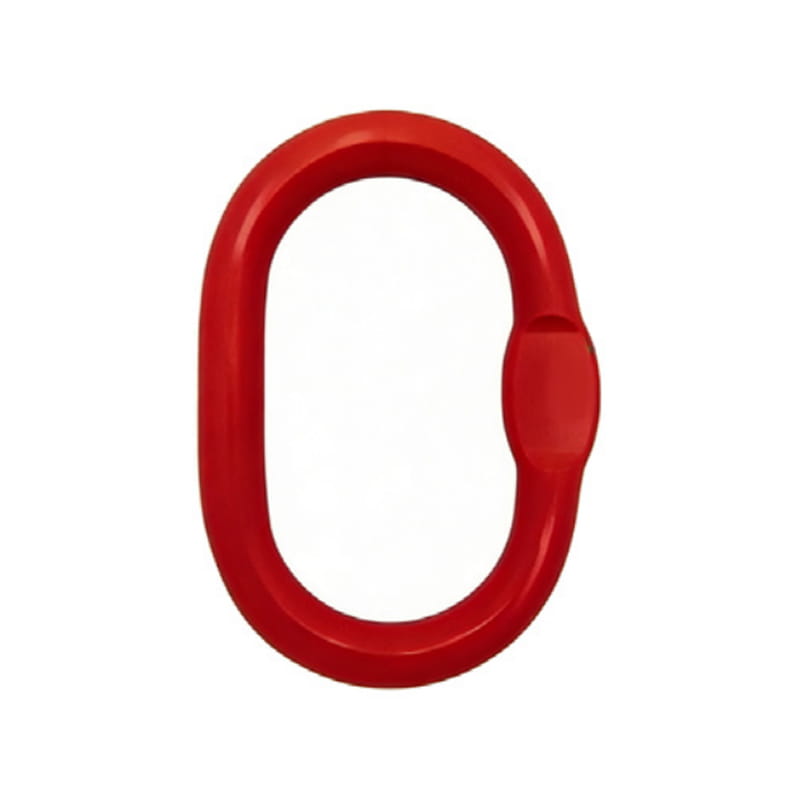 Grade 100 Master Link for Multi-Leg Chain SlingsFor multi-leg slings, this forged Grade 100 master link gathers legs to a crane hook and supports traceable assembly records.View Product →
Chain sling inspection is not complicated, but it is unforgiving of improvisation. The slings that fail are rarely the ones that were abused, they are the ones that were never measured. Pick a caliper, pick a form, pick a date once a year, and write down what you find even when you find nothing. If you need a starting point for the criteria themselves, this guide to Grade 80 and Grade 100 alloy chain slings covers the strength and safety background, and the rest is discipline.
Related Products
-
 View More
-
 View More
ASTM A1023 8x36 Steel Core High Flexibility Crane Rope
-
 View More
ASTM A1023 Galvanized 7X7 7X19 Small Diameter Flexible Specialty Wire Rope
-
View More
ASTM A1023 6x24 Fiber Core Flexible Lifting Wire Rope
-
View More
ASTM A1023 6x12 Fiber Core Steel Wire Rope
-
 View More
ASTM A1023 34x7 Rotation Resistant Category 2 Steel Wire Rope
Contact Us
-

-
 +86-13395162883 / +86-0510-86361180
 -
 No. 25 Xizhang Road, Changshou Village, Zhouzhuang Town, Jiangyin City, Wuxi City, Jiangsu Province, China


- Quick Links
- Product Categories
- Wire Rope
- Wire Rope Fittings
- Chain
- Wire Rope Accessories
- Packaging Types

Message Us Now !
