


 English
Before Choosing Which Sling to Use: 5 Critical Factors That Decide the Lift
Content
Two slings on the same rack can look almost identical and still carry completely different limits. A 10 mm wire rope sling and a 10 mm Grade 80 chain sling are not interchangeable, and neither one has a usable rating until you know the hitch, the leg angle and the load. Most capacity mistakes we see at the quotation stage start with a buyer specifying from a catalogue page instead of from the lift itself.
The five checks that settle a sling choice
- Working load limit at the worst hitch and leg angle in the lift, not the straight-pull figure printed on the tag.
- Material family - wire rope, chain or synthetic - matched to abrasion, heat, chemicals and edge contact.
- Termination and hardware: splice or ferrule type, thimble, a latch that closes, the right shackle pin.
- D/d ratio and edge radius, which quietly remove capacity that the paperwork still claims.
- Traceability: identification tag, inspection interval and the design factor required at the job site.
Get those five points right and the specification usually writes itself. The sections below show where each one moves the number, and where purchasing teams routinely pay for capacity they never actually receive.
Material Family Comes Before Size
Buyers tend to open with diameter, but diameter only means something inside a material family. The same nominal size behaves very differently depending on whether you are holding a rope, a chain or a synthetic web.
Wire rope slings
Flexible, good shock absorption, efficient in a basket hitch, and easy to route through awkward loads. Capacity depends heavily on the bend radius and on the termination. Internal wire breaks and corrosion are hard to see, so inspection discipline matters more than with chain.
Alloy chain slings
Grade 80 and Grade 100 alloy chain takes abrasion, sharp edges and heat that would condemn a rope or a web. It is heavier, less forgiving of shock loading, and every link is inspectable with the eye. Strength is less sensitive to tight bends than rope.
Synthetic web and roundslings
Light, non-marring and gentle on painted or machined surfaces. They are also the family most easily destroyed by the job: cut edges, UV exposure, weld spatter and sustained heat above roughly 90 degrees Celsius all end their service life early.
 Single-Leg Wire Rope SlingsSingle-Leg Wire Rope Slings are EIPS IWRC wire rope slings built for straight single-line lifts, offered with eye-eye, eye-thimble, or eye-hook end terminations to mat...View Product →
A practical shortcut: abrasive or hot loads point to alloy chain, long soft loads and tight routing point to wire rope, and finished surfaces with no heat or edges point to synthetic. If a load combines abrasion with a soft surface, add edge protection rather than changing family - that is usually the cheaper fix. Our own wire rope is produced in the same plant where the slings are assembled, which keeps construction and termination data in one document set instead of two.
Load, Hitch and Angle: The Numbers That Set Capacity
A single-leg sling rated at 2,000 kg is not a 2,000 kg answer to every lift. Choking the same sling, bending it over a small pin, or opening the legs to 60 degrees changes what it can carry. This is the step where the largest gap appears between what was ordered and what the job needs.
Factors are applied to the single-leg working load limit of the sling, and reflect standard mode factors used for alloy chain bridles and widely applied to wire rope bridles of comparable construction.
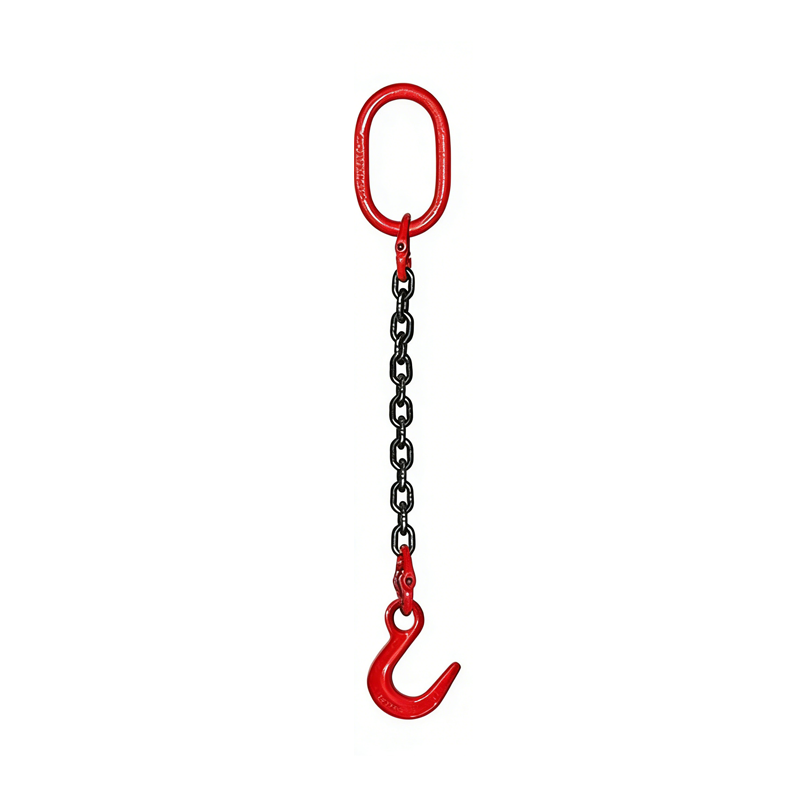 Grade 80 Alloy Steel Single Forged Open Hook Leg Chain Sling (SOF)This Grade 80 Alloy Steel Single Forged Open Hook Leg Chain Sling (SOF) is assembled from heat-treated alloy steel chain and a forged Grade 80 open foundry hook, provi...View Product →
Two more quantities belong in the same conversation as the angle: the centre of gravity and the number of legs sharing the load. An off-centre load can put most of the weight on one leg even in a four-leg assembly, which is precisely why the standard allowance ignores the fourth leg. Ask the rigging crew to measure the angle under load, not on the drawing.
Hidden Metrics: D/d Ratio, Bend and Heat
The D/d ratio is the diameter of the object a sling bends around divided by the sling diameter. It is the least visible derating factor in rigging, and it applies to every soft-eye termination, every basket hitch and every shackle bow in the assembly.
Sling efficiency against D/d ratio (representative values)
100%
92%
86%
75%
50%
25:1
15:1
10:1
5:1
2:1
Heat behaves the same way. Alloy chain holds its rating in normal industrial conditions and then derates above roughly 200 degrees Celsius. Synthetic slings lose capacity well before that. Fiber-core wire rope should not be asked to work near hot surfaces at all without a protective sleeve. Galvanizing baths, foundry floors and engine test cells are the places where this check pays for itself.
Where Slings Are Actually Used
Order books from rigging distributors follow a fairly stable pattern, and the pattern explains why one family rarely covers a whole fleet.
Construction and infrastructure - 34%
General manufacturing - 24%
Ports, terminals and marine - 16%
Energy and utilities - 14%
Agriculture and transport - 12%
Construction and production floors buy chain and wire rope in volume because abrasion, edges and heat dominate their risk. Ports lean toward wire rope for reach and flexibility. Agriculture and transport sit in the middle, with fewer lifts but longer storage periods - which is why inspection intervals there are often set by calendar rather than by cycle count.
A Selection Workflow That Survives an Audit
Treat the choice as a short project with five steps. Each one produces a document you can hand to an inspector later.
1. Define the worst lift, not the average one
Record load weight, centre of gravity, the widest leg angle expected and the total number of legs. This single page sets everything else.
2. Match the family to the environment
Abrasion, heat, chemicals, edges and storage conditions decide whether wire rope, chain or synthetic is even a candidate.
3. Size against the worst-case limit
Apply the hitch and angle factors to the single-leg rating, then confirm the minimum design factor for your jurisdiction - 5:1 for wire rope slings and 4:1 for alloy chain slings in most regimes.
4. Specify termination and hardware by name
State the splice or ferrule type, the thimble standard, hook latch requirement and shackle pin style. Vague terms on a purchase order are the most common source of replaced shipments.
5. Require the tag, certificate and inspection interval
A sling without an identification tag is untraceable, and untraceable equipment is unusable on a serious site regardless of how good the steel is.
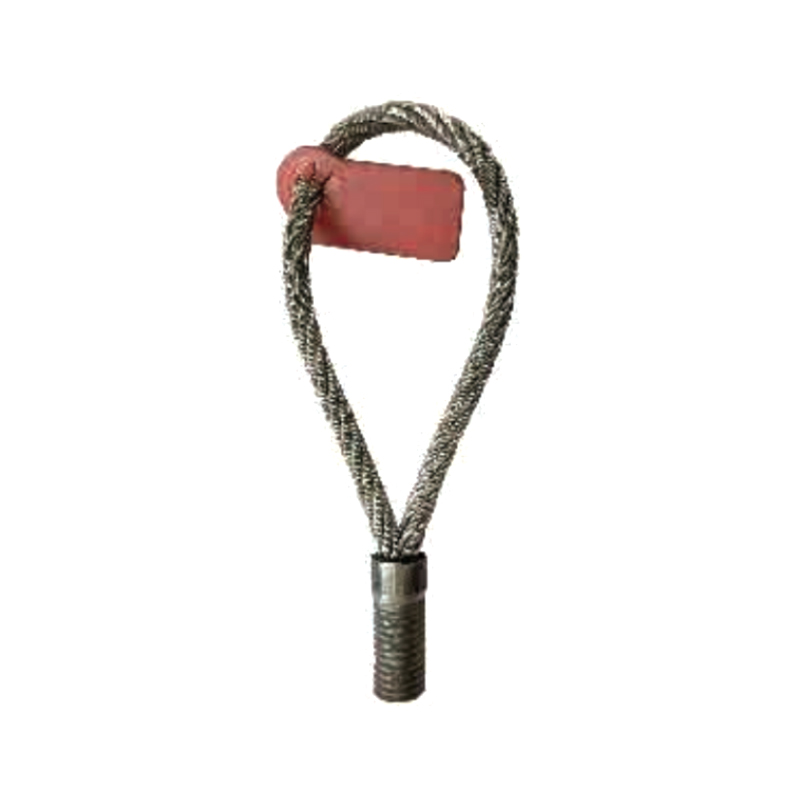 Four-Leg Bridle Wire Rope SlingsAt the top of our bridle sling range, Four-Leg Bridle Wire Rope Slings distribute a load across four EIPS IWRC rope legs and alloy oblong links for the heaviest or wid...View Product →
On cost, the cheapest unit price rarely wins over three years. A wire rope sling costs less up front but may be replaced more often in abrasive service; an alloy chain sling costs more and typically lasts longer with lower replacement frequency; synthetic slings cost least and are consumed fastest. Price the replacement cycle and the inspection hours, not just the first invoice.
Inspection, Tagging and Compliance
Sling safety is a documentation practice as much as a steel practice. Three things are non-negotiable: a permanent tag showing the working load limit and reach, a pre-use examination by the operator, and periodic inspections recorded by a competent person.
- Inspection frequency should follow severity of service, running from monthly for continuous abrasive work to annual for light or intermittent use.
- Removal criteria are objective: broken wires, corrosion, kinks, heat damage, a 10 percent reduction in rope diameter, deformed links, stretched hooks, missing latches and illegible tags.
- Every inspection needs a date, an identifier and a signature. A file that only appears after an incident is not a compliance system.
Design factors and proof-load expectations are set by regulation or standard rather than by preference, so it pays to know the exact clause that applies. A useful reference for the United States is the OSHA 29 CFR 1910.184 design factor for wire rope slings, and equivalent requirements exist under EN 818-4 for chain slings and ASME B30.9 for slings generally.
What to Put in the RFQ
Most technical disputes at delivery trace back to four omissions in the initial request: leg angle, environment, the construction standard, and the tag requirement. Adding a short specification block to the RFQ removes nearly all of them.
- Load, worst leg angle, hitch type and number of legs used for sizing.
- Required construction standard, for example EN 12385-4, ASTM A1023 or ISO 2408 for the rope, and the alloy grade for chain.
- Termination type, thimble standard, hook latch and shackle configuration.
- Length tolerance, tag content, certificate quantity and packaging that keeps the identity of each item intact in transit.
Choosing a sling is a sequence, not a purchase: define the worst lift, match the material to the environment, size against the angle and the bend, specify the hardware precisely, and document everything. Buyers who follow that order stop over-specifying diameter to compensate for unknown conditions, and they stop paying twice for a sling that was never going to survive the job. Whatever the answer turns out to be - a wire rope sling, an alloy chain bridle or a synthetic assembly - the decision should be traceable to a number on a page, not to habit.
Related Products
-
 View More
-
 View More
ASTM A1023 6X19 Steel Core High Breaking Force Lifting Wire Rope
-
 View More
ASTM A1023 6x19 Fiber Core Flexible Engineering Lifting Wire Rope
-
 View More
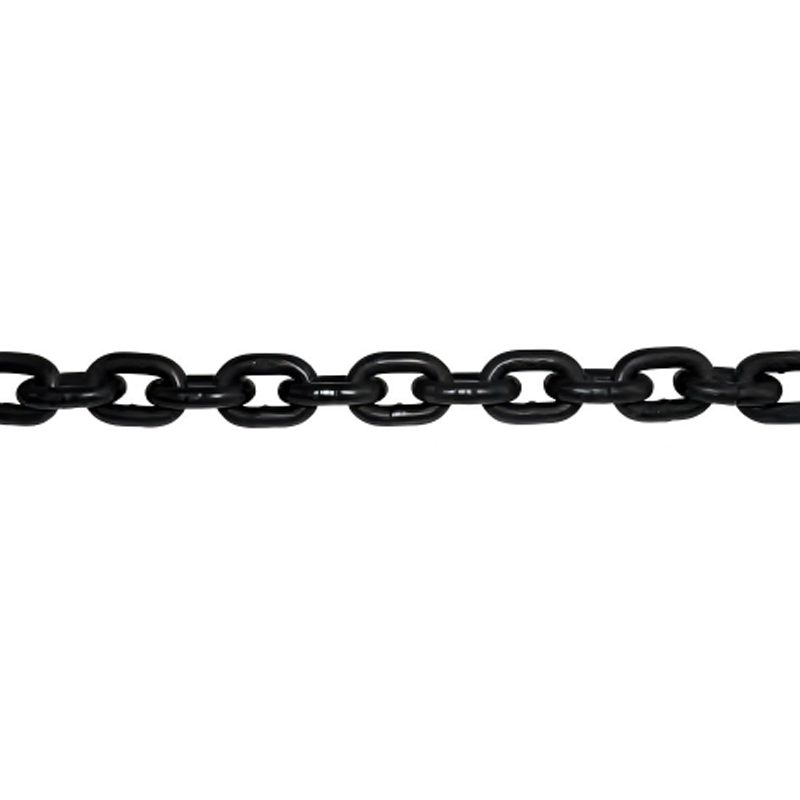
Alloy Steel Heat-Treated Overhead Lifting & Rigging Grade 80 Chain
-
 View More
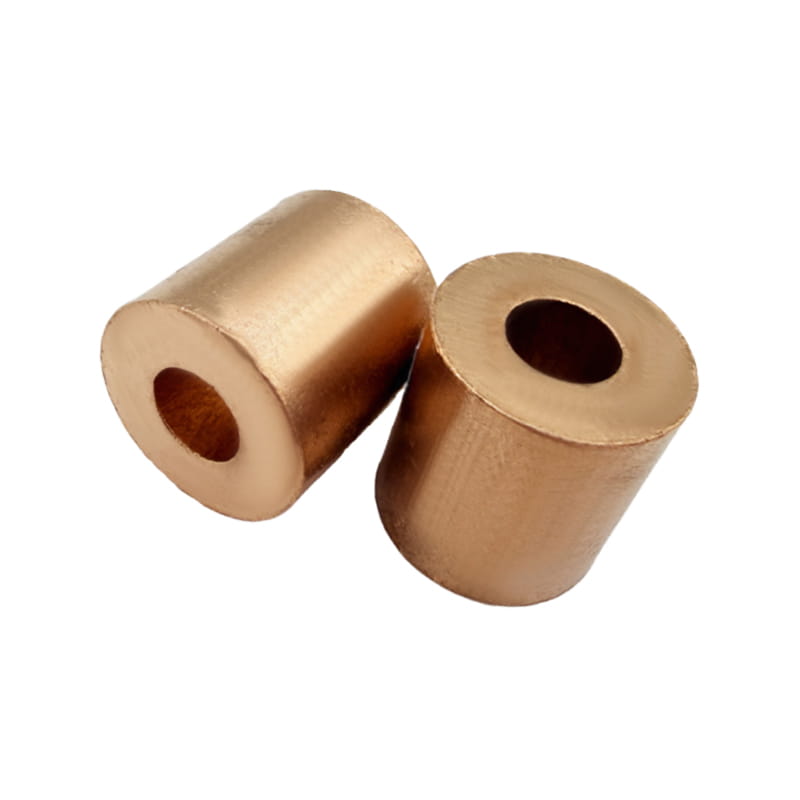
Copper Buttons Stops
-
 View More
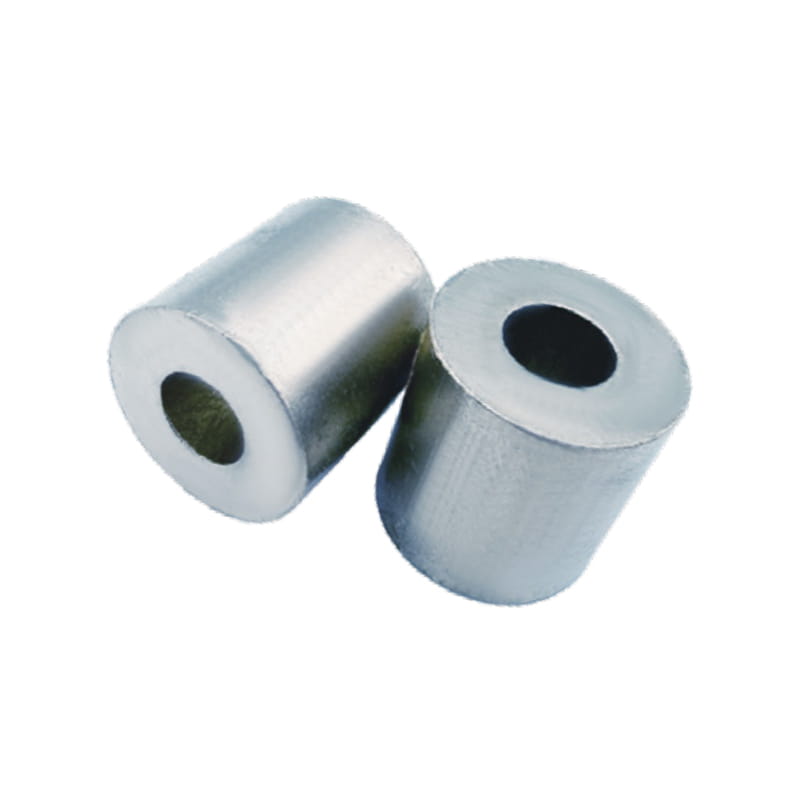
Aluminium Stop Buttons
Contact Us
-

-
 +86-13395162883 / +86-0510-86361180
 -
 No. 25 Xizhang Road, Changshou Village, Zhouzhuang Town, Jiangyin City, Wuxi City, Jiangsu Province, China


- Quick Links
- Product Categories
- Wire Rope
- Wire Rope Fittings
- Chain
- Wire Rope Accessories
- Packaging Types

Message Us Now !
