


 English
OSHA 29 CFR 1910.184 Wire Rope Slings Design Factor 5: What It Means for Compliance
Content
- 1 Where the 5:1 Design Factor Is Written in 29 CFR 1910.184
- 2 Why OSHA Settled on 5:1 for Wire Rope Slings
- 3 Design Factor at a Glance: Wire Rope vs. Other Sling Types
- 4 The Hidden Metric: What the 5:1 Margin Really Looks Like
- 5 Industry Applications of Wire Rope Slings at 5:1
- 6 How to Specify and Purchase a Wire Rope Sling That Meets the 5:1 Rule
- 7 Inspection, Maintenance, and Records: Keeping the 5:1 Margin Real
A maintenance supervisor walks the yard before the morning shift. A wire rope sling pulled from the rack has an oil-stained, nearly unreadable tag. When the OSHA inspector asks for the rated load, nobody can confirm whether the sling still complies with 29 CFR 1910.184. This is exactly the situation where one number matters most: the wire rope sling design factor of 5.
Bottom line: Under 29 CFR 1910.184(f), a wire rope sling must have a design factor of at least 5:1. The sling's minimum breaking force (MBF) must be no less than five times its working load limit (WLL). Any tag, purchase specification, or inspection record that ignores this ratio exposes the crew to unnecessary risk.
Design factor 5 is both a legal requirement and an engineering safety margin. Once you understand where it comes from and how it is verified, sling selection becomes clearer instead of a guessing game.
Where the 5:1 Design Factor Is Written in 29 CFR 1910.184
29 CFR 1910.184 is OSHA's main rule for slings used in general industry. The wire-rope subsection, 1910.184(f), contains the design-factor requirement. The regulation is also specific about construction: cable laid, 6x19, and 6x37 slings must have a minimum clear length of wire rope equal to 10 times the component rope diameter between splices, sleeves, or end fittings. Braided slings need 40 times the component rope diameter between loops or end fittings.
Minimum Breaking Force
The load at which a new rope is expected to break, based on construction, diameter, and material grade published by the rope manufacturer.
Working Load Limit
The maximum steady load a sling is rated to carry in a defined configuration. This is the number normally shown on the sling tag.
Design Factor
MBF divided by WLL. For wire rope slings under the OSHA rule, this value must be at least 5.
Why OSHA Settled on 5:1 for Wire Rope Slings
A design factor is not a promise that a sling can safely handle five times its rated load. It is the margin that absorbs real operating conditions before the rope approaches the point of failure. Five was chosen because the rigging industry learned, from long field history, that wire rope needs more tolerance than chain or synthetic web slings.
Fatigue
Bending around sheaves and fittings breaks wires one by one. The higher margin keeps the sling inside a safe life expectancy.
Abrasion and Wear
Contact with edges and rough surfaces removes metal and reduces the effective cross section of the load-bearing strands.
Corrosion
Moisture and chemicals attack the surface and create pitting that is not always visible through a dirty rope.
Shock and Impact
A sudden load release or catch can produce instantaneous forces far above the static load number.
Termination Efficiency
Eye splices, swaged sleeves, and hooks rarely restore 100% of the rope's breaking strength, so the margin must cover that loss.
These five factors work together. That is why the OSHA standard does not allow a lower design factor even when the sling looks new.
Design Factor at a Glance: Wire Rope vs. Other Sling Types
The 5:1 wire rope requirement is higher than other sling categories because failure modes and inspection tolerance differ. The comparison below is a practical reference.
Sling type
Design factor
Typical role
Wire rope sling
5:1
General lifting, heavy fabrication, cranes, field rigging
Alloy steel chain sling
4:1
Abrasive work, high heat, choker hitches
Synthetic web sling
3:1
Light loads, finished surfaces
Design factor values follow OSHA 29 CFR 1910.184 and ASME B30.9 guidance; always verify the specific sling tag.
The Hidden Metric: What the 5:1 Margin Really Looks Like
Tags show WLL, but the real number behind the tag is MBF. If the same rope were rated with a lower design factor, the allowable load would climb while the safety margin shrank. The chart below uses a typical 1/2 inch 6x19 IWRC wire rope with an MBF of approximately 26,600 lb.
5,320 lb
5:1
6,650 lb
4:1
8,870 lb
3:1
Illustrative calculation only. Confirm the actual MBF, construction, and tag rating before any lift.
Here is what the numbers mean in the field. At 5:1 the sling keeps a comfortable margin for wear and shock. At 4:1 the same rope carries 25% more load, but every percent of section loss pushes the actual margin closer to the edge. At 3:1 the sling fails OSHA compliance before it even leaves the rack.
Industry Applications of Wire Rope Slings at 5:1
Wire rope slings show up wherever loads are heavy, environments are aggressive, or the cost of failure is high. The distribution below reflects typical field observations rather than a formal market study.
Construction and general industry: 35%
Manufacturing and assembly: 25%
Oil, gas, and utilities: 15%
Mining and mineral processing: 10%
Marine and port operations: 8%
Other rigging tasks: 7%
For construction, general industry, and plant maintenance, the 5:1 sling is often the default rigging tool because it balances strength with inspectability.
How to Specify and Purchase a Wire Rope Sling That Meets the 5:1 Rule
A design factor is created at the drawing board, not on the job site. The way to protect it is a specification that makes the ratio verifiable. Use these steps when you order.
1
Define the worst-case load, including the heaviest object, rigging hardware, and any dynamic effects.
2
Select a wire rope construction appropriate for the duty: 6x19 or 6x36 with an independent wire rope core is a common starting point.
3
Ask for the minimum breaking force on paper, not only the WLL.
4
Check end terminations: thimbles, swaged sleeves, hooks, and eye splices change the effective strength.
5
Confirm the tag will show the WLL for the exact configuration you plan to use and will be permanently attached.
6
Verify the delivered sling's tag and certificate match: MBF divided by WLL must be at least 5.
For a single-leg vertical lift, a factory-made single-leg wire rope sling with a clear tag and matched certificate is the fastest way to stay compliant. If the load requires two legs, a two-leg bridle sling helps distribute the force while keeping the design factor consistent across the whole configuration.
 Factory-Made Single-Leg Wire Rope Slings with Tagged WLLThis sling offers single-leg vertical or basket lifts with rated capacities up to 37 tons and matched thimbles and hooks. The tag and certificate support easy compliance checks before ordering.View Product →
 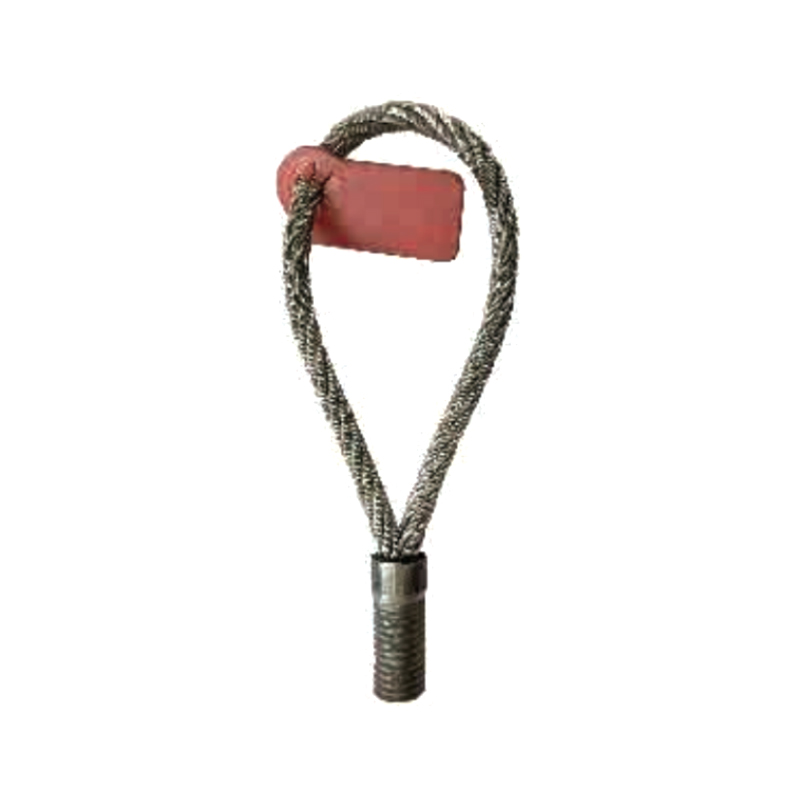 Two-Leg Bridle Wire Rope Sling with Master LinkDesigned for two-point lifts, this bridle sling distributes load at 60, 45, or 30 degree angles with published working load limits. Ensures stable handling for bulky or long loads.View Product →
Before ordering, ask two questions. Will the permanent tag show the WLL for the exact configuration you plan to use? Can you get the certificate that supports the 5:1 calculation? If the answer is not a clear yes, keep looking.
If your team is unsure how to read a sling certificate, contact our technical team with the load data and application details. We will help you specify a sling you can defend during an audit.
Inspection, Maintenance, and Records: Keeping the 5:1 Margin Real
The design factor is only as strong as the inspection program that protects it. A dirty, kinked, or damaged rope can no longer deliver the calculated MBF even though the tag still shows the same WLL.
- Perform a visual inspection before each day's first use.
- Remove the sling when broken wires reach the limits in the manufacturer's rating or ASME B30.9 criteria.
- Watch for corrosion, wear, crushing, bird-caging, heat damage, and damaged end fittings.
- Verify that splices and end fittings have not slipped or opened.
- Never use a sling with an unreadable or missing tag.
- Record inspection results and keep them available for OSHA or internal safety review.
Inspection frequency depends on service severity. Harsh environments, shock loading, and abrasive contact justify shorter intervals. The same logic connects to general rigging and lifting safety core rules that many plants already follow.
Endless and grommet slings deserve extra attention because they have no traditional end fittings. A grommet wire rope sling relies on the continuity of the rope body itself, so surface wire condition is the main defense once the tag is gone.
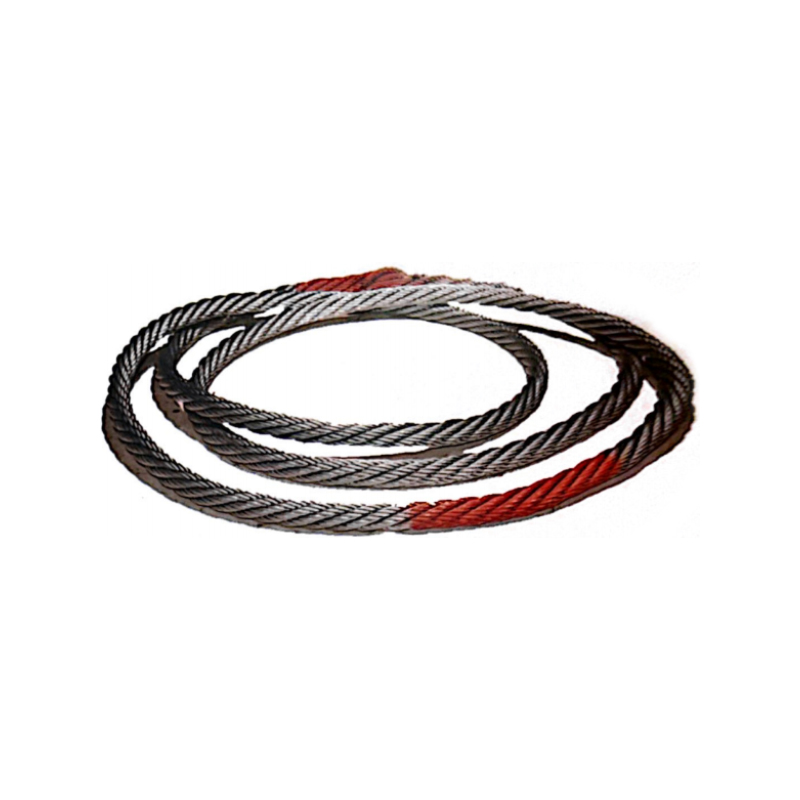 Grommet Endless Sling with 6x36 IWRC ConstructionA closed-loop sling with high wire count for flexibility and abrasion resistance, ideal for heavy lifts. Requires paired use and proper pin diameter, with contact point kept free.View Product →
Final word: a new wire rope sling with a clear tag and a certified 5:1 design factor is the starting point. Daily checks, periodic inspection, training, and honest paperwork keep that margin working for the people on the floor. When in doubt, retire the sling and replace it with a unit you can verify.
Related Products
-
 View More
-
 View More
6×37M-WSC Steel Wire Rope – EN 12385-4
-
 View More
EN 12385-4 Class 8×19S-IWRC Steel Wire Rope – 8-Strand Seale Construction with IWRC
-
 View More
EN 12385-4 Class 6×19S-IWRC Steel Wire Rope – High-Durability Independent Wire Rope Core
-
View More
EN 12385-4 Class 8×7+FC Steel Wire Rope – 8-Strand Fiber Core Wire Rope
-
 View More
EN 12385-4 Class 6×7+FC Steel Wire Rope – High Strength Fiber Core Wire Rope
Contact Us
-

-
 +86-13395162883 / +86-0510-86361180
 -
 No. 25 Xizhang Road, Changshou Village, Zhouzhuang Town, Jiangyin City, Wuxi City, Jiangsu Province, China


- Quick Links
- Product Categories
- Wire Rope
- Wire Rope Fittings
- Chain
- Wire Rope Accessories
- Packaging Types

Message Us Now !
