


 English
Anchor Points for Fall Arrest: Strength, Selection, and Compliance Guide
Content
A crew leader on a commercial roof needs to tie off a worker near the edge. The anchor point looks solid—a steel beam bolted to the structure. But when the safety engineer asks for the load rating, no one can produce documentation. That gap between appearance and verifiable strength is where most fall arrest failures begin.
Core conclusion: A compliant anchor point for fall arrest is not a single number or a random strong-looking fixture. OSHA 29 CFR 1926.502(d)(15) and 1910.140(c)(13) require either a 5,000-pound load per worker or a system designed with a safety factor of at least two, supervised by a qualified person. Selection, installation, and inspection must be treated as one engineered system.
This guide explains the practical requirements behind that conclusion, the hardware that makes it work, and the mistakes that turn a good anchor into a liability.
How Fall Arrest Anchor Points Actually Work
An anchor point is the fixed or mobile connection that transfers fall arrest forces into a structure. It is the first link in a chain that includes the anchorage connector, lifeline or lanyard, harness, and the worker. If any link is weak, the entire system fails.
Fall arrest versus fall restraint
Fall restraint systems prevent a worker from reaching a fall hazard. Fall arrest systems stop a fall after it happens. Anchor requirements differ because arrest forces include dynamic loads from deceleration. A restraint anchor may need less capacity, but the same OSHA load rules often apply when the system is designed for arrest.
The safety factor of two
The 5,000-pound rule is familiar, but OSHA also allows a system designed with a safety factor of two. That means if the anticipated maximum arrest force is 1,800 pounds, the anchor and its connections must withstand at least 3,600 pounds. The calculation must be documented by a qualified person, not guessed on site.
Fixed anchor: permanently installed on steel, concrete, or wood. Requires engineering approval and periodic inspection.
Mobile anchor: portable system for temporary work. Must be rated for the application and placed on a verified structure.
Horizontal lifeline: engineered cable system with multiple anchor points. Requires design by a qualified person.
For concrete or cast-in applications, preassembled lift anchors can provide a verified connection point when the design load and installation are specified by the engineer. Hardware must match the anchor type and the expected load direction.
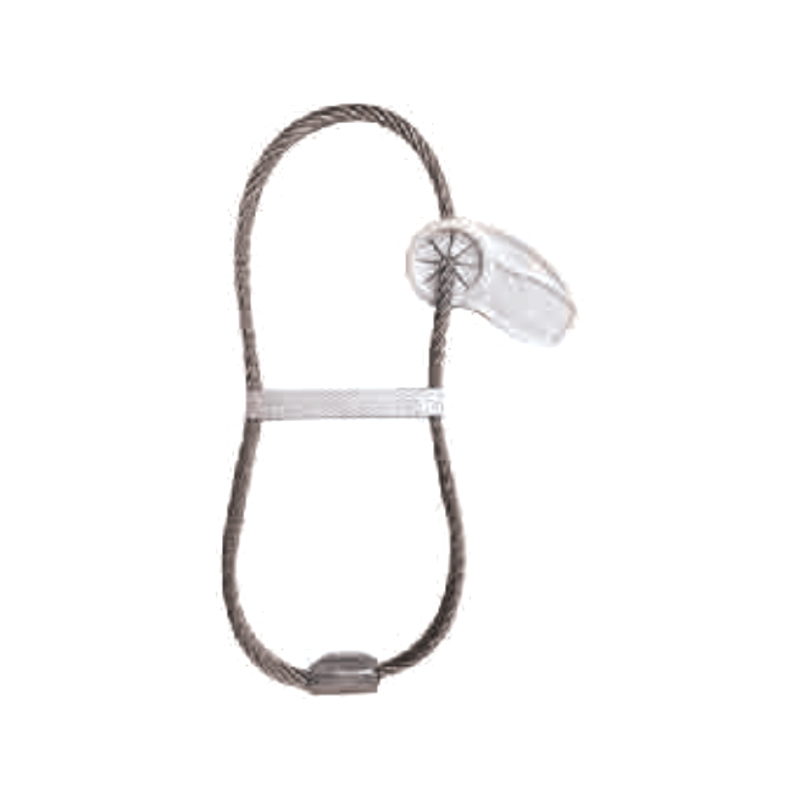 WS04 Cast in Lift AnchorThe WS04 cast in lift anchor is a reliable component for lifting operations in construction and related fields.View Product →
Data Comparison: Anchor Types and Their Trade-Offs
The right anchor depends on structure, mobility, and load path. The table below compares common options using typical performance categories, not exact site values.
Anchor type
Typical capacity
Best use
Key limitation
Steel beam clamp
5,000 lb or engineered
Structural steel erection
Requires correct beam size and clamp torque
Concrete cast-in anchor
Design-specific
New construction, precast
Cannot be added after pour without engineering
Wire rope sling around structure
Rated by sling capacity
Temporary tie-off
Edge protection and angle of pull critical
Mobile anchor cart
5,000 lb rated
Roofing, maintenance
Must be placed on stable, load-rated surface
Table: Simplified comparison of fall arrest anchor options. Actual capacities must be verified by a qualified person for each site.
Hidden Indicators: Why Anchors Fail
Anchor failures rarely happen because the metal is too weak. They happen because the installation, inspection, or load path was wrong. The chart below shows common failure causes reported in fall protection incident reviews.
40%
Improper installation
25%
Overload or wrong rating
15%
Corrosion or wear
12%
Missing inspection
8%
Other
Improper installation is the largest hidden indicator. A 5,000-pound anchor bolted to a 1,000-pound substrate is a 1,000-pound anchor. Load direction matters too: a tie-off that pulls sideways or upward can reduce capacity dramatically.
Industry Application Distribution
Fall arrest anchor demand varies by industry because exposure, duration, and structure differ. The pie chart below illustrates typical market share of anchor point usage across sectors.
Construction: 40%
Energy and utilities: 20%
Telecommunications: 15%
Manufacturing: 15%
Other: 10%
Construction leads because of roof work, steel erection, and scaffolding. Energy and telecom workers often use mobile anchors and horizontal lifelines on towers and poles. Manufacturing uses fixed anchors for maintenance access.
Selection and Installation Workflow
Choosing an anchor point is a process, not a purchase. Follow these steps in order and document each decision.
Step 1 — Assess fall distance and clearance. Calculate total fall distance including lanyard deployment, deceleration distance, and worker height. If clearance is insufficient, use a fall restraint system instead.
Step 2 — Identify structural strength. A qualified person must confirm the substrate can handle the anchor load. Steel beams, reinforced concrete, and engineered wood have different capacities.
Step 3 — Select the anchor and connectors. Use rated hardware. Forged anchor shackles provide a secure connection when sized correctly. Wire rope slings can wrap around structural members when edge protection is used.
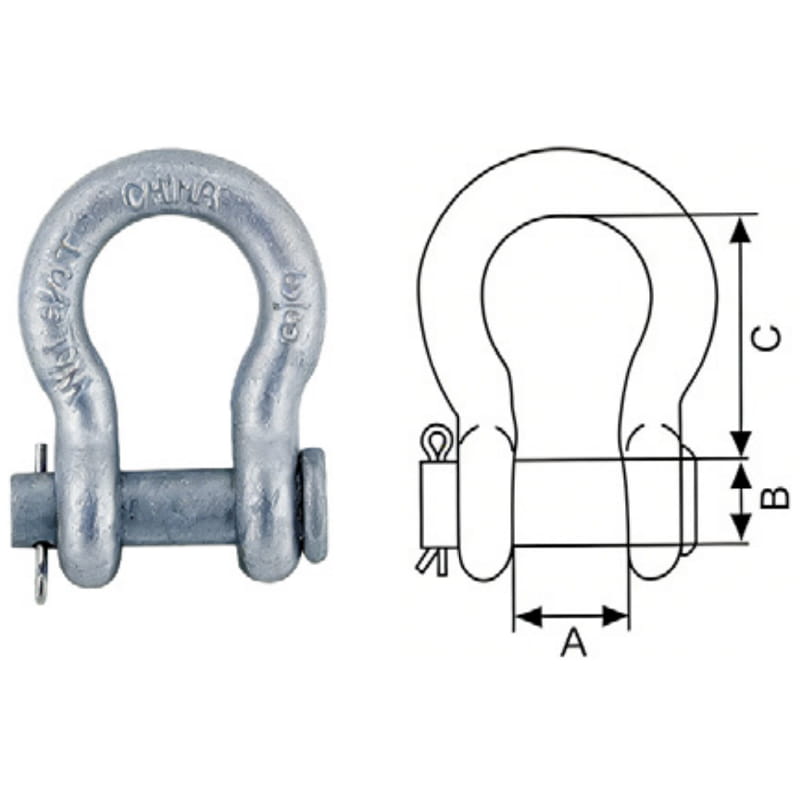 Hot Dip Galvanized Drop Forged Anchor ShackleReliability starts with the fitting itself. The SAFETYLIFT Hot Dip Galvanized Drop Forged Anchor Shackle, a galvanized anchor (bow) shackle, accepts two or more sling ...View Product →
  Single-Leg Wire Rope SlingsSingle-Leg Wire Rope Slings are EIPS IWRC wire rope slings built for straight single-line lifts, offered with eye-eye, eye-thimble, or eye-hook end terminations to mat...View Product →
Step 4 — Install and verify. Follow manufacturer torque and orientation requirements. Mark the anchor with its capacity and inspection date.
Step 5 — Train and inspect. Workers must know how to connect, how to check the anchor before use, and what defects to report.
A common ROI mistake is buying the cheapest anchor without accounting for installation labor, engineering review, and inspection costs. A properly rated anchor that lasts ten years costs less per use than a temporary fix that fails inspection.
Maintenance and Compliance Essentials
Once installed, an anchor point must be maintained as safety equipment. OSHA requires that personal fall protection systems be inspected before each use and at regular intervals. Damaged or suspect components must be removed from service.
- Inspect for corrosion, cracks, deformation, and loose fasteners.
- Check wire rope for broken wires, kinks, or bird-caging.
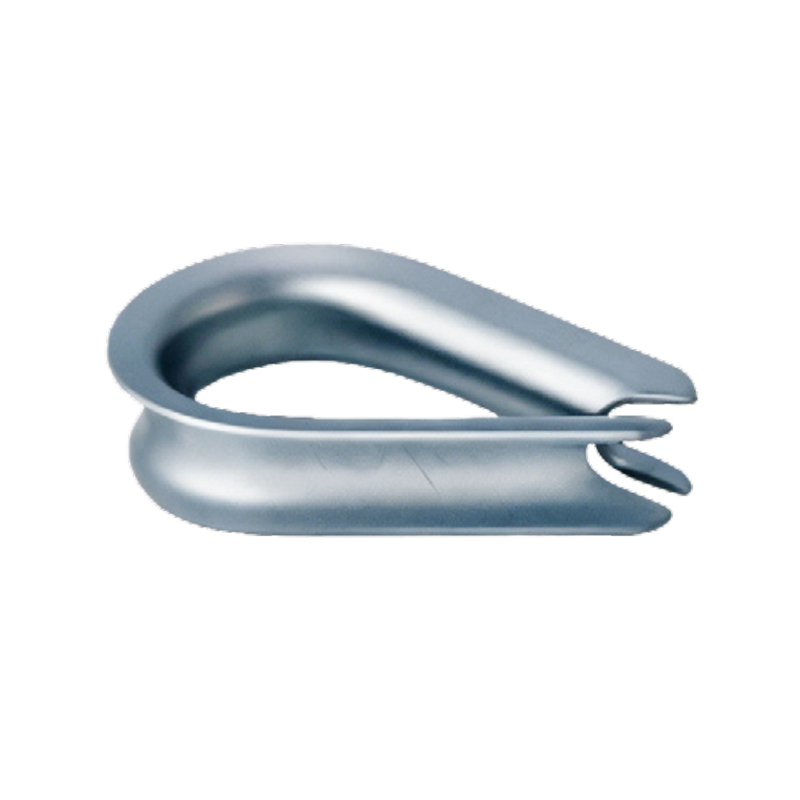
- Verify that shackle pins are secure and thimbles are not worn through.
- Keep inspection records for every anchor and connector.
- Retrain workers when equipment, site conditions, or regulations change.
For a broader review of load limits and hardware safety, see these rigging and lifting safety rules. They apply to many of the same components used in fall arrest anchor assemblies.
Jiangyin General Metals manufactures wire rope and rigging hardware that can be specified for anchor assemblies, including slings, shackles, thimbles, and clips. When your engineer specifies a wire rope anchor connection, review the wire rope product range for compatible components. Always confirm the final design with a qualified person.
The difference between a safe anchor point and a dangerous one is rarely visible. It is in the documentation, the substrate, the load path, and the inspection record. Start with the OSHA requirement, choose rated hardware, install it under qualified supervision, and treat every anchor as part of a complete system. That approach protects workers and keeps projects moving.
Related Products
-
 View More
-
 View More
ASTM a 1023 Classification 7x7 and 7x19 Small Diameter (Galvanized) Specialty Cord
-
 View More
Galvanized Standard Wire Rope Thimble
-
 View More
High-Strength Load Securement Transport Binder Grade 70 Chain
-
 View More
WS04 Cast in Lift Anchor
-
 View More
ASTM A1023 6X7 Steel Core High Strength Abrasion Resistant Wire Rope
Contact Us
-

-
 +86-13395162883 / +86-0510-86361180
 -
 No. 25 Xizhang Road, Changshou Village, Zhouzhuang Town, Jiangyin City, Wuxi City, Jiangsu Province, China


- Quick Links
- Product Categories
- Wire Rope
- Wire Rope Fittings
- Chain
- Wire Rope Accessories
- Packaging Types

Message Us Now !
