Content
A crane lift is only as stable as the rigging beneath the hook. The practical test is not whether a sling fits, but whether the whole load path—hook, shackle, sling, thimble, and attachment point—has been checked against weight, center of gravity, angle, environment, and inspection history. A six-ton load can impose far more than six tons of tension on each leg as the sling angle flattens. A sharp edge can damage a rated assembly before the load leaves the ground.
Quick answer: plan crane rigging around five checkpoints: verified load weight and center of gravity; sling angle and tension; compatible hardware with visible rated capacity; edge, heat, or chemical protection; and documented inspection before use. If any checkpoint is unconfirmed, stop the lift.
Crane rigging is a system of force transfer. The crane hook supplies the lifting force, but the sling, shackle, thimble, and attachment point decide how that force reaches the load. A rigging plan that looks acceptable on paper can still fail in practice when the load is off-center, the sling angle is too shallow, or the hardware is mismatched to the eye or pin.
The hook should sit over the center of gravity unless the lift is intentionally controlled. An offset center of gravity causes load tilt, uneven leg tension, and side loading that a vertical capacity chart does not describe.
Tension rises quickly as the angle from horizontal decreases. For a symmetrical two-leg lift, each leg carries roughly load ÷ (2 × sine of the angle). That relationship is why a shallow angle can overload a sling even when the load weight seems modest.
A shackle, thimble, or hook must fit the rope and the attachment point without pinching, side loading, or spreading the eye. “It closes” is not a fit check; the pin diameter, eye width, and rated capacity all need to agree.
The working sequence is simple but unforgiving: confirm the load, calculate or look up tension for the planned geometry, select rigging with capacity above that tension, protect the sling at edges and corners, then inspect the assembled system before the lift. The most common field problem is not a missing item—it is a mix of items that were each rated on their own but were never checked as a complete assembly.
For a symmetrical two-leg lift, the angle from horizontal is a useful planning check. The values below exclude dynamic effects, hardware efficiency losses, and an off-center center of gravity; they are a starting point for tension, not a substitute for a lift plan.
Illustrative two-leg geometry only. Confirm the actual sling angle in the field, not the angle shown on a drawing.
The highest-risk findings are often administrative and physical at the same time: missing identification tags, damaged hook latches, shallow sling angles, and absent edge protection. A useful audit does not only record “failed” items; it shows where routine habits are eroding the rated system.
Illustrative audit profile. Count your own findings by category so repeat issues become visible.
Construction hoisting and general industrial maintenance account for the broadest routine demand. Port, mining, and power projects are smaller in number but often impose stricter requirements for corrosion resistance, abrasion protection, and documented inspection. The link between application and rigging choice matters: the same wire rope sling that works in a clean fabrication shop may be a poor choice near salt spray or abrasive quarry dust.
Construction hoisting: 34%
Industrial maintenance: 28%
Port and offshore: 20%
Mining and quarrying: 12%
Power and utility: 6%
For construction hoisting applications, the buying decision usually turns on repeated handling, edge wear, and how quickly a sling can be inspected between lifts. In port and mining work, the same purchase should also consider moisture, grit, and the cost of downtime when a damaged assembly is found late.
Mix shown for planning context, not as a market forecast.
Good selection is a sequence, not a shopping list. Start with the lift, then work outward to the sling and hardware. This order prevents a common purchasing error: buying a higher-capacity sling while ignoring the shackle, thimble, or attachment point that will actually carry the load.
For routine single-point lifts, a single-leg wire rope sling with a protected eye is a practical starting point when the load is balanced and the attachment geometry is simple.
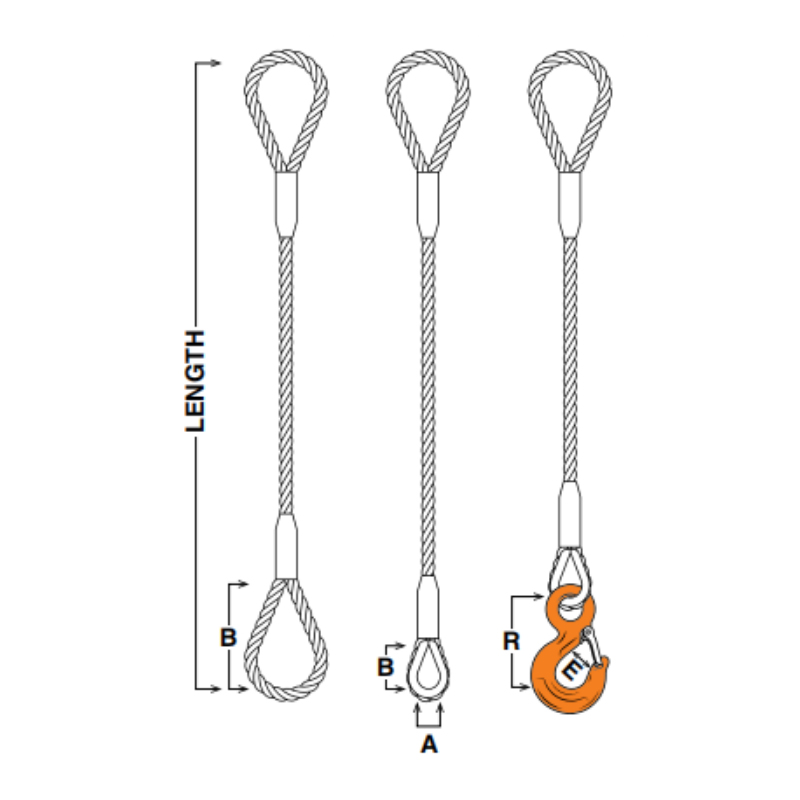 Single-Leg Wire Rope Slings for Straight LiftsFor balanced single-point lifts with simple attachment geometry, these EIPS IWRC slings offer eye, thimble, or hook ends in sizes from 1/4 to 2 inches.View Product →
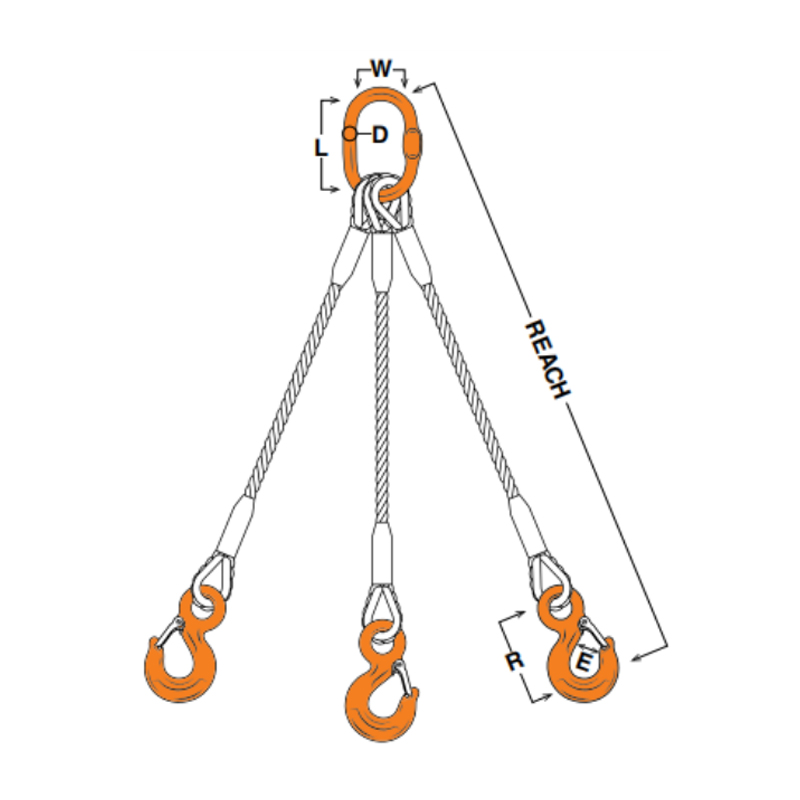
For asymmetric or multi-point lifts, a four-leg bridle assembly can spread the load, but only when leg length and tension are balanced. An unadjusted bridle often overloads one leg while the others appear slack.
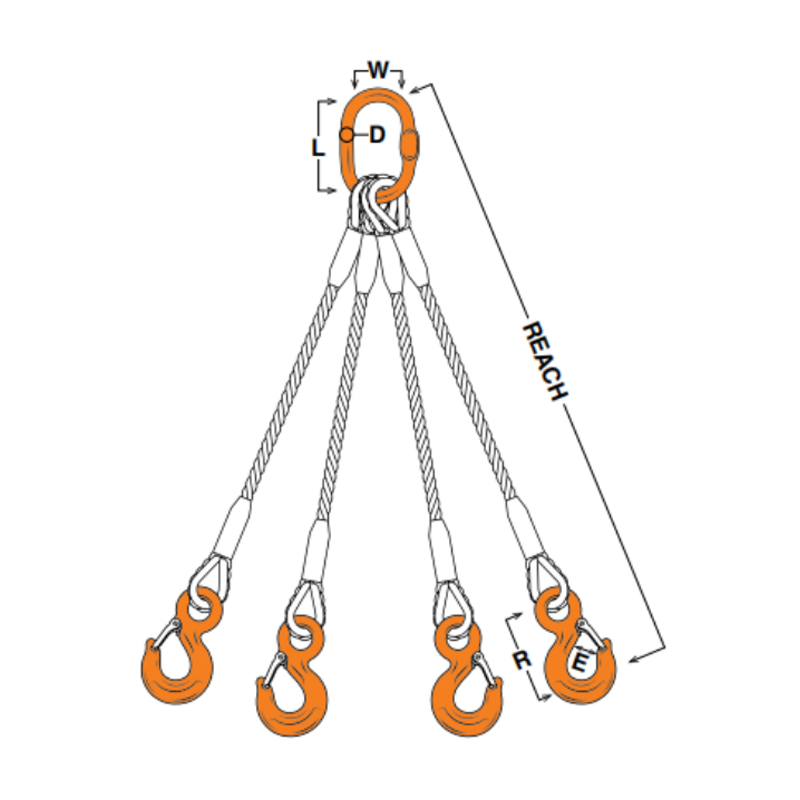 Four-Leg Bridle Wire Rope Slings for Multi-Point LiftsUse these four-leg EIPS assemblies for heavy or wide loads with four lift points, with published capacities at 60, 45, and 30 degree angles.View Product →
Re-rigging, crane standby, replacement hardware, and schedule delay usually cost more than the planned inspection and correct sling selection.
Standardizing hardware by load range, rope diameter, and inspection interval reduces selection time and makes spare-part stocking more predictable.
A short pre-lift checklist used consistently is more valuable than a long procedure that the crew cannot apply at the hook.
Inspection is a release-to-service decision, not paperwork. A sling or fitting that has lost its tag, been field-modified, or shows distortion should be removed from service until its identity and condition are confirmed. Ratings apply only to the assembly as designed, used, and maintained.
A heavy-duty thimble protects the eye and spreads abrasion at the pin, but it must match the shackle pin and rope diameter rather than merely fit loosely. A thimble that is too small can pinch the eye; one that is too wide can allow the shackle to shift under load.
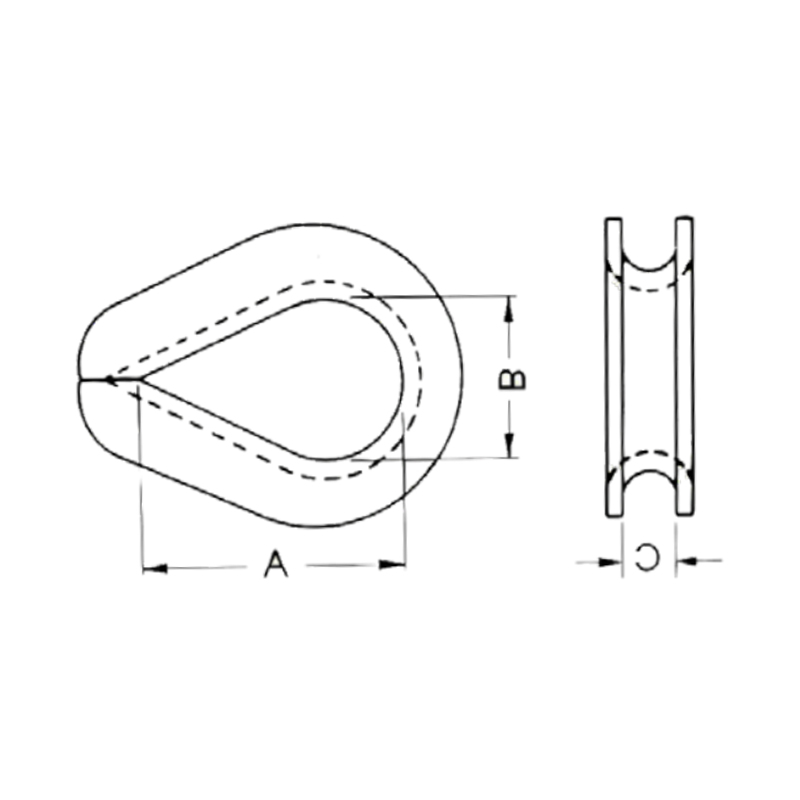 Hot-Dip Galvanized Heavy-Duty Wire Rope ThimbleFor heavy slings needing a reinforced eye bearing surface, this galvanized thimble is sized for rope from 1/4 to 3-1/2 inches.View Product →
For a concise field reminder, review these rigging and lifting safety rules on load limits and compare them with your own pre-lift checklist. The goal is not more paperwork; it is a repeatable check that catches mismatched hardware, shallow angles, and damaged assemblies before the crane takes tension.
Crane rigging performs best when the buyer, rigger, and lift supervisor use the same assumptions: known load weight, verified angle, compatible hardware, protected sling, and documented inspection. When those assumptions are visible at the hook, the lift is easier to control—and far easier to defend after an incident review.
 View More
 View More
View More
View More
 View More








 English
 Português
